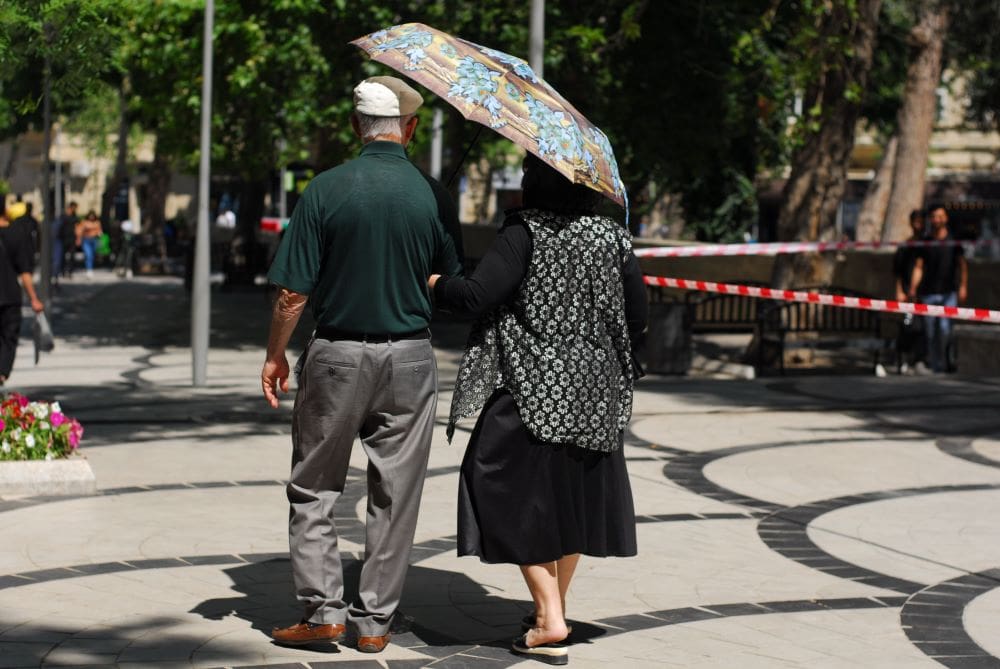
The Copernicus Climate Change Service (C3S) has reported that November 2024 was the second-warmest November on record globally, with an average surface air temperature of 14.10°C.

This figure is 0.73°C above the 1991-2020 average, surpassed only by November 2023. The first eleven months of 2024 also mark the warmest January-to-November period in recorded history, with a global-average temperature anomaly of 0.72°C above the 1991-2020 baseline, outpacing the same period in 2023 by 0.14°C.

C3S Air Temperature Anomaly November 2024 res
The Copernicus Climate Change Service (C3S) has published its latest monthly Climate Bulletin, focused on key climate trends in November 2024. Credit: European Union, Copernicus Climate Change Service Data

C3S data indicates a virtually certain likelihood that 2024 will become the warmest year on record, exceeding the 1.5°C threshold above pre-industrial levels. This milestone underlines the urgency of addressing climate change through informed global strategies.

The C3S visualization highlights significant surface air temperature anomalies in November 2024 across Europe, Africa, the Americas, and Asia, showcasing the widespread impact of rising global temperatures.

Such detailed analyses from C3S are instrumental for policymakers and stakeholders, providing actionable insights to guide climate adaptation and mitigation measures.

More information is available here.

Featured image credit: European Union, Copernicus Climate Change Service Data

Image: African easterly wave convection moving over Africa into the Atlantic captured by the Meteosat Second Generation Satellite
Dampening the “seeds” of hurricanesClimate

Dampening the “seeds” of hurricanes

By Audrey Merket, National Center for Atmospheric Research (NCAR) | University Corporation for Atmospheric Research (UCAR) Increased atmospheric moisture may alter critical weather patterns over…
SourceSourceJuly 2, 2024 Full article
Image: The airgun bundles towed behind the SONNE generate short, strong sound pulses that penetrate the sea floor and are reflected by geological layers. Seismometers on the sea floor record these signals in order to analyze the structure of the subsurface
New data for risk assessment of submarine landslidesNews

New data for risk assessment of submarine landslides

Kiel | GEOMARExploring active and passive continental slopesComprehensive Survey and Drilling Programme How dangerous are submarine landslides in deep-sea canyons? To answer this question, the…
SourceSourceFebruary 20, 2025 Full article
Satellite Image: Falsterbonäset peninsula, Sweden
Image of the day: Sweden’s Falsterbonäset peninsula from aboveNews

Image of the day: Sweden’s Falsterbonäset peninsula from above

At the southwestern edge of Sweden, the Falsterbonäset peninsula stretches into the sea like a narrow, windswept finger, bordered by the Öresund Strait to the…
Muser NewsDeskMuser NewsDeskMay 25, 2025 Full article