
Paris, France | AFP
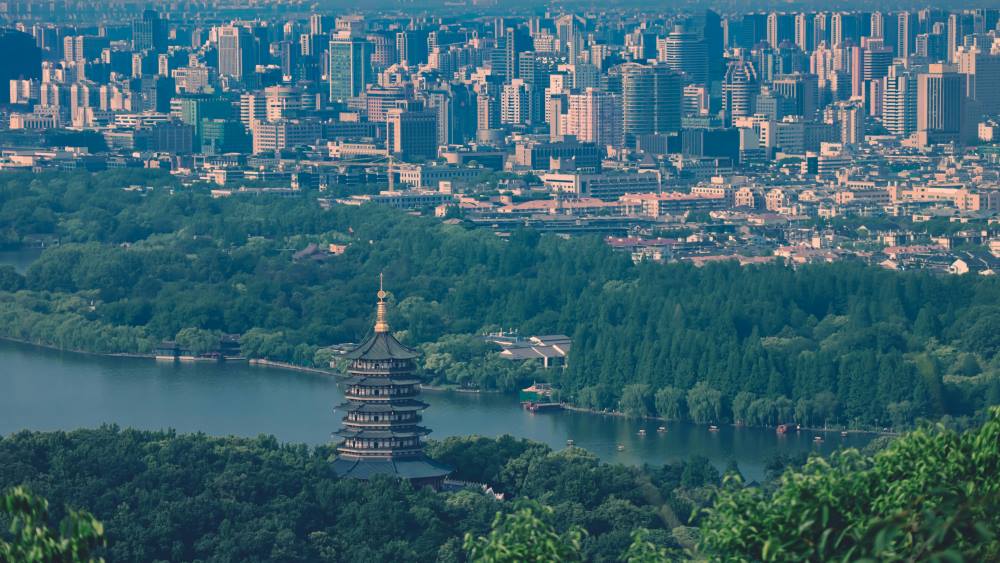
US representatives are not at a key climate science meeting in China, a source told AFP on Monday, sitting out a fight over the UN’s next blockbuster assessment of global warming research.
US officials declined to comment last week on reports that America’s delegation had been pulled from the UN talks in Hangzhou.
But a source at the meeting, which opened on Monday, told AFP: “We haven’t seen anyone from a US delegation, and there hasn’t been anyone representing the US in plenary session so far.”
US President Donald Trump, who has called climate change a “scam” and made no secret of his disdain for the United Nations and climate science, has already pulled Washington out of the landmark Paris Agreement for a second time.
However, observers said the decision to withdraw scientists from the Intergovernmental Panel on Climate Change (IPCC), set up in 1988 to inform policymakers, was a new “blow”.
“Regardless of political views on climate policy, abandoning the world’s most authoritative scientific body on climate risks, impacts, and pathways will damage US research and society,” warned leading climate scientist Johan Rockstrom.
“International scientific progress is key to prosperity, equity, and resilience — for the US and all nations,” said Rockstrom, of the Potsdam Institute for Climate Impact Research.
The meeting in Hangzhou comes on the heels of the hottest year on record and rising alarm over the pace of warming.
It will be dominated by a battle over the content and timing of the UN’s next major assessment of climate change research.
Many wealthy countries and developing nations most exposed to climate impacts want that three-part assessment — covering physical science, climate impacts and solutions for reducing greenhouse gas levels — out before 2028.
That is when countries are due to provide their next “stocktake” — an accounting of their progress in responding to climate change.
Producing the IPCC reports before the stocktake would mean countries can be guided by the most up-to-date science, these countries argue.
‘Pushing against limit’
They face objections from some oil producers and major polluters with rising emissions, including India, China, Saudi Arabia and Russia.
They say producing the next report, the IPCC’s seventh since 1990, before the stocktake deadline will rush the process.
Top UN officials sought to inject urgency into proceedings as they opened the meeting, which will largely take place behind closed doors.
The Paris Agreement’s goal of keeping temperature rises no more than 1.5 degrees Celsius above pre-industrial levels “is still mathematically possible but of course we are pushing against that very limit”, warned UN Environment Programme chief Inger Andersen.
“Time is not on our side,” she warned, urging “ambitious” outcomes from the talks.
Without directly mentioning any country, Andersen also said: “Science cannot be politicised.”
“The IPCC stands unequivocally for the best science the world can deliver. Science is physics, not politics,” she said.
The UN’s first stocktake, published in 2023, was a damning indictment of the lack of progress on tackling warming.
In response, countries at the COP28 climate summit in Dubai issued a groundbreaking call for the world to move away from fossil fuels, albeit cushioned by concessions to oil and gas interests.
Observers fear the meeting will be the last chance to agree that the IPCC’s next assessment arrives before the 2028 stocktake.
“I think why it’s been so bitter is where we are at this moment in time — the geopolitical pressure and the financial pain of impacts, and the transition away from fossil fuels,” said one person close to the talks, who was not authorised to speak on the record.
They noted that new findings in fast-developing areas of research with global implications would be particularly important for policymakers as they draw up new climate plans.
The IPCC has warned the world is on course to cross the Paris deal’s long-term warming threshold of 1.5C above pre-industrial levels in the early 2030s.
Recent studies have also suggested that milestone could be crossed before the end of this decade.
klm/sah/pbt
© Agence France-Presse
Article Source:
Press Release/Material by Kelly MACNAMARA | AFP
Featured image credit: evening_tao | Freepik