Summary:
Worry about climate change and strong social norms make Americans more likely to talk about global warming with family and friends, according to a study published in PLOS Climate.
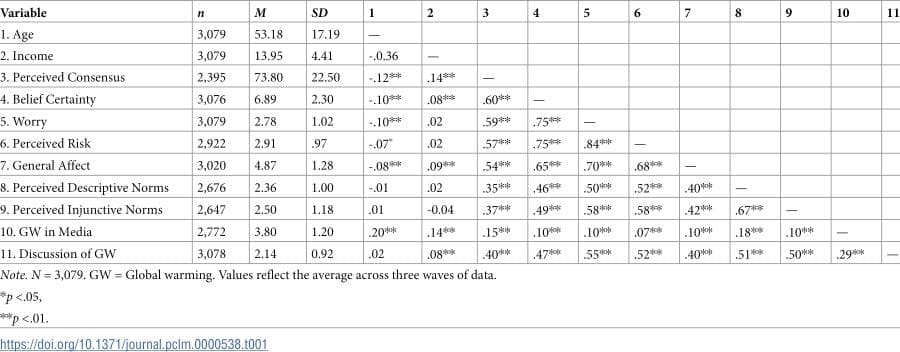
Researchers from George Mason University, led by Margaret Orr, surveyed 3,079 American adults between 2020 and 2021 to explore why only about a third of Americans discuss climate change even occasionally. The study examined how feelings of worry, perceived risk, media exposure, and perceptions of social support influence the likelihood of having climate conversations.
The findings show that individuals who feel more anxious about global warming, perceive a higher personal risk, regularly encounter climate stories in the media, or sense that society approves of climate action are significantly more likely to engage in discussions. Among these, perceived social norms stood out as the strongest predictor.
The researchers suggest that using media and entertainment to boost the visibility of climate action, along with pairing risk communication with positive solutions, could encourage more conversations. They also recommend future research into the content of these discussions and how conversations may differ across relationships beyond family and friends, including coworkers and broader community networks.
Breaking the American climate silence
Americans are more likely to discuss climate change with family and friends if they feel worried or at risk, perceive society as supportive of pro-climate behaviors or see global warming depicted in the media, according to a study published in the open-access journal PLOS Climate by Margaret Orr from George Mason University College of Humanities and Social Sciences in Fairfax, Virginia, and colleagues.
Curbing global warming’s effects requires systemic changes and government policies to reduce carbon emissions. Among individual climate actions (e.g., avoiding meat and limiting air travel), discussing climate change with others can foster wider collective support for climate policies. However, only one-third of Americans report discussing climate change with family and friends even occasionally, leading to the trend dubbed “climate silence.”
To learn more about what prompts climate-focused discussions, Orr and her colleagues analyzed a nationally representative, cross-sectional survey of 3,079 American adults distributed between 2020 and 2021. The survey included questions like, “How worried are you about global warming?” and, “About how often do you hear about global warming in the media?”, and all participants indicated how often they discuss global warming with family and friends.
Results identified four factors that may predict climate change discussions: worry, perceived risk, perceived social norms and exposure to media coverage about global warming. Perceived social norms — perceptions about how members of society think, feel and behave — emerged as the strongest predictor.
With these findings, the researchers aim to support climate conversations through several methods, including using news, entertainment and social media to popularize climate action; highlighting risk factors or causes of worry (and pairing those issues with solutions to prevent mental distress); and encouraging climate journalism.
The researchers note that this study measured the frequency of climate conversations, not their content; future research might explore how and why content may differ. Additionally, this study focused on familial and friendship relationships among American adults; future studies might expand into other relationship types — like neighbors or coworkers — and into vulnerable communities.
The authors add: “We found that the more worried people are about climate change, the more they hear about it in the media, and the more they perceive themselves to be at risk from the impacts of climate change, they are in turn more likely to talk about climate change with others.”
Journal Reference:
Orr M, Borth A, Kotcher J, Campbell E, Myers T, Maibach E, et al., ‘Breaking the climate silence: Predictors of discussing global warming with family and friends’, PLOS Climate 4 (4): e0000538 (2025). DOI: 10.1371/journal.pclm.0000538
Article Source:
Press Release/Material by PLOS
Featured image credit: Aarón Blanco Tejedor | Unsplash