Paris, France | AFP | Muser NewsDesk
The amount of carbon dioxide that can be stored underground is vastly overestimated, new research said Wednesday, challenging assumptions about the “limitless” potential this approach holds to reducing global warming.
Carbon capture and storage (CCS) is complex and costly, and critics say it cannot meet the urgent need to slash planet-heating emissions and meet the world’s climate targets.
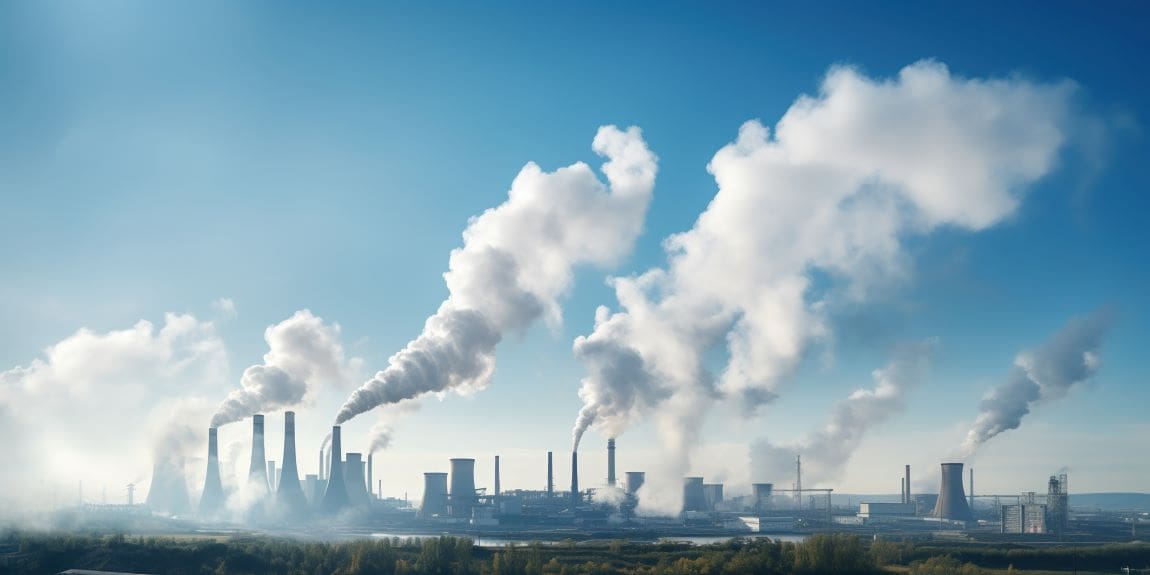
One approach works by avoiding emissions at a polluting source — such as a factory smokestack. Another, known as direct air capture, pulls CO₂ from the atmosphere.
But both require the CO₂ captured to be injected into rock and locked away underground for centuries or millennia in deep geologic formations.
At present, carbon capture plays a vanishingly small part in addressing the climate crisis. But scientists and policymakers consider it a necessary tool to help bring future warming down to safer levels.
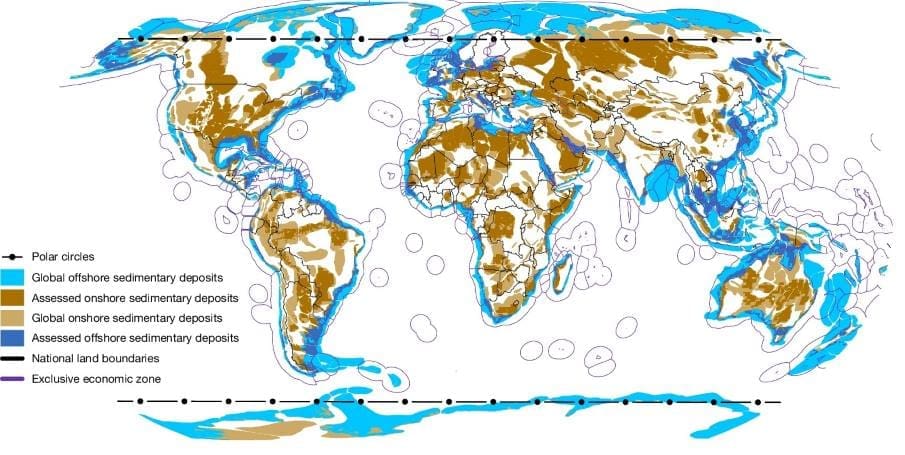
However, in a new paper published in the prestigious journal Nature, a team of international scientists has sharply revised down the global capacity for safely and practically storing carbon underground.
They estimated a global storage limit of around 1,460 billion tonnes of CO₂ — nearly 10 times below scientific and industry assumptions.
This “reality check” should better inform decision-makers considering carbon capture in their long-term climate policies, the study’s senior author, Joeri Rogelj, told AFP.
“This is a study that helps us understand — and actually really corrects — the working assumption of how much carbon, or CCS capacity, would be available if one takes a practical and a prudent approach,” said Rogelj, an expert in carbon capture from Imperial College London.
‘Scarce resource’
To reach this revised figure, the team — led by the International Institute for Applied Systems Analysis — took existing assumptions about carbon storage and ruled out locations deemed risky or economically unviable.
This included, for example, injecting CO₂ below major civilian centres, into zones of known seismic activity, or many hundreds of metres beneath the oceans.
The findings underscored that carbon storage should be treated as “a scarce resource that needs to be deployed strategically to maximise climate benefits rather than… a limitless commodity,” the study said.
This storage limit could be breached by 2200, the authors said, noting they could not account for possible advances in carbon capture, or other technologies, in future.
Fully exhausting this capacity could lower global temperatures by 0.7°C — but that should be reserved for future generations who may need it most, the authors said.
The IPCC, the UN’s expert scientific panel on climate change, says carbon capture is one option for reducing emissions, including in heavy polluting sectors like cement and steel.
But it remains infinitesimal: Rogelj said the amount of carbon captured every year at present amounted to approximately one-thousandth of global annual CO₂ emissions.
np/jj
© Agence France-Presse
Journal Reference:
Gidden, M.J., Joshi, S., Armitage, J.J. et al., ‘A prudent planetary limit for geologic carbon storage’, Nature 645, 124–132 (2025). DOI: 10.1038/s41586-025-09423-y
Article Source:
Press Release/Material by Nick Perry | AFP
Featured image credit: nuraghies | Freepik (AI Gen.)