
Summary:
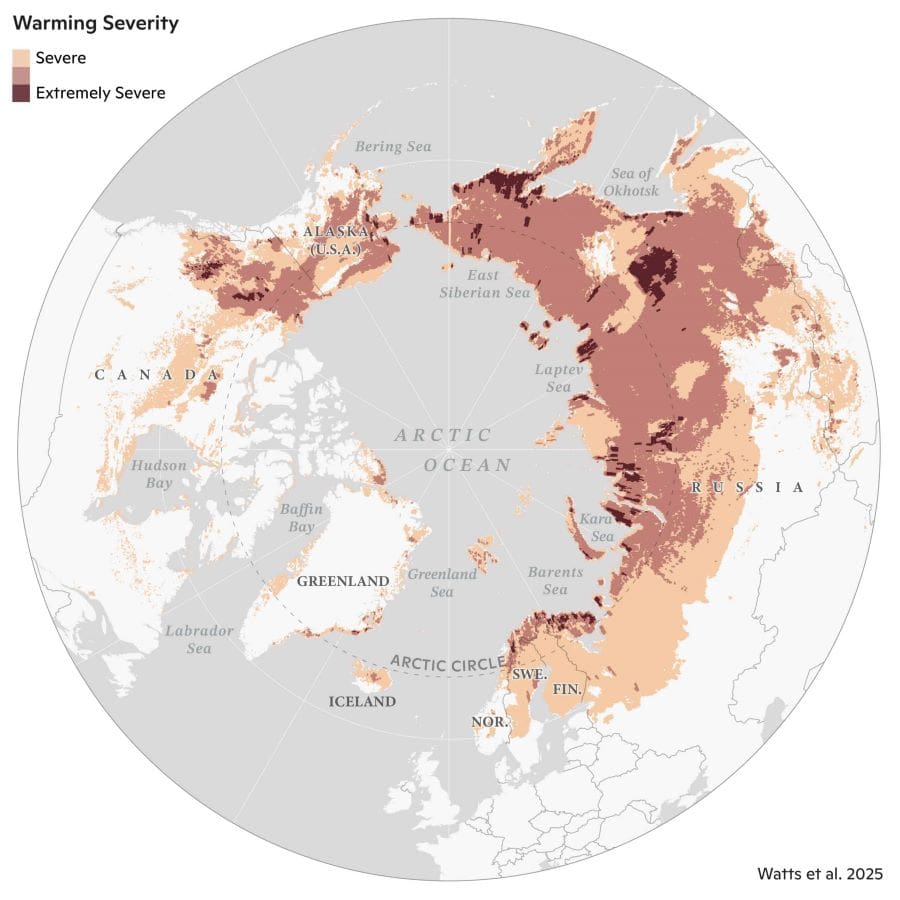
Across Norway’s reindeer grazing areas, Sámi reindeer herders are dealing with mounting pressure from climate change and expanding land use tied to development and the green transition. Warmer winters, shifting snow conditions, and shrinking pastures are reshaping daily herding practices. At the same time, governance tools intended to support sustainability are, according to new research, constraining herders’ ability to adapt.
A recent study published in Tidsskrift for samfunnsforskning (Journal of Social Research) examines how the “rules of use” introduced with the 2007 revision of the Reindeer Husbandry Act affect Sámi reindeer husbandry. Based on qualitative interviews with representatives from Norwegian authorities and Sámi herders in both southern and northern regions, the research explores how these rules are developed, how herders’ knowledge is included, and how the regulations influence self-governance and climate adaptation.
The study shows that the rules of use function as a form of state control that limits flexibility in the face of rapid environmental change. While authorities have viewed the rules as a path toward sustainable and self-governed reindeer husbandry, many herders experience them as a source of conflict, misunderstanding, and reduced room for manoeuvre. The authors argue that meaningful adaptation will require management systems that take Sámi knowledge and lived experience seriously.
Old rules do not work for reindeer husbandry
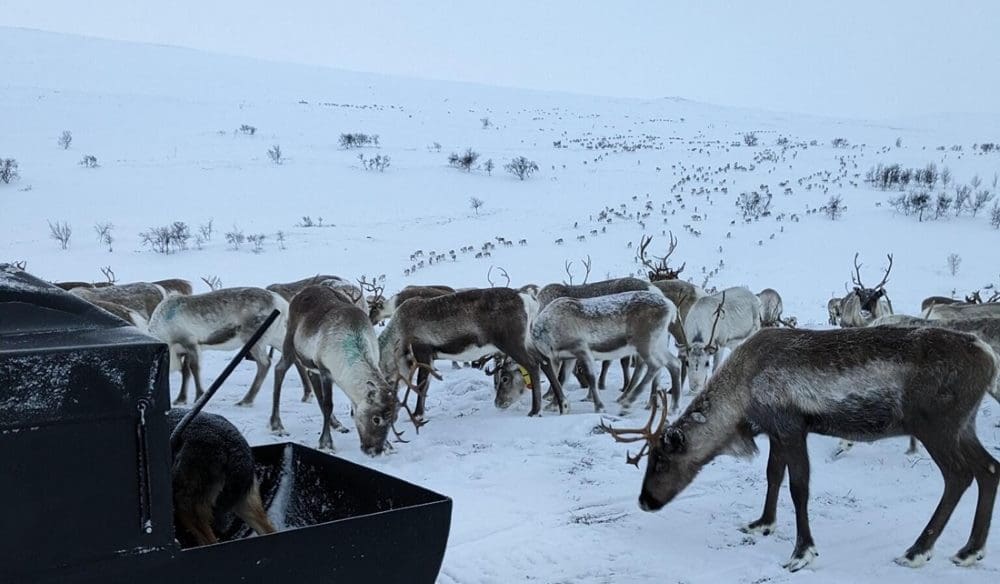
How do the rules of use affect Sámi reindeer husbandry? And what exactly is “sustainability” in connection with reindeer herding?
A new research article examines how the rules of use for reindeer husbandry affect reindeer herders’ self-governance and ability to adapt to climate change.
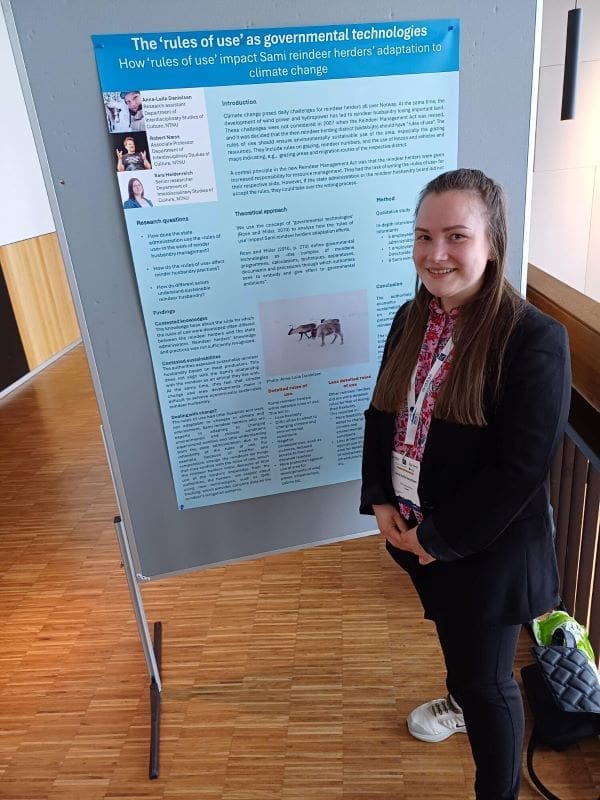
“The rules of use were supposed to be a tool for the reindeer herders to achieve sustainable reindeer husbandry and self-governance for reindeer husbandry, where they themselves would manage the land and the use of the land,” says Anna-Laila Danielsen, a PhD candidate at the Department of Interdisciplinary Studies of Culture at the Norwegian University of Science and Technology (NTNU).
However, the rules of use create challenges for Sámi reindeer herding, especially in the face of climate change and development, since the rules are not open enough to be able to accommodate adjustments.
Danielsen herself grew up with reindeer herding, and has personal experience of how the rules of use affect the operation. She is the first author of the new article with Sara Heidenreich and Robert Næss from the same department.
The authorities can intervene
The rules of use were introduced during the revision of the Reindeer Husbandry Act in 2007. To ensure the regulations would work with the Sámi practices for reindeer herding and to give the reindeer herders autonomy, the intention was that the reindeer herders should develop the rules for their own sïjt (n.e. “Sïjte” is a Southern Sami word for the traditional management group in Sami reindeer herding, where a group of reindeer owners cooperate to gather and manage reindeer in common herds. In Northern Sami it is called “siida”).
But the proposed revisions had to be approved by the authorities before they could be implemented.
“The County Governor was authorized to go in and edit the rules of use if the authorities thought it was necessary,” says Danielsen.
This authorization is generally not very popular among the Sámi who practice reindeer herding.
“The rules are challenging since the County Governor does not have practical knowledge of how the Sámi practice reindeer herding. They can thus develop rules of use that are not in line with the reindeer herders’ understandings of the reindeer, practices and areas,” says Danielsen.
Inflexible rules
The rules of use are also used by the county governors as a source for knowledge about Sámi reindeer herding practices.
But a number of reindeer herders feel that they do not have the flexibility they need to face changes, such as climate change. Adaptation strategies for today’s changes were not included in the 2007 revision, since the country and climate looked different at the time.
And reindeer herders can be punished in the form of sanctions if they do not follow the rules. The reindeer herders feel that since they were involved in developing their own rules of use, they are confronted with previous attitudes and understandings by having the rules of use used against them.
Norwegian SciTech News has previously written about how climate change has changed reindeer herding.
Too detailed or too relaxed
In general, the reindeer herders encounter either one or the other of these two problems, depending on whether the rules of use are too detailed or too poorly detailed:
- During the development of the rules of use, some reindeer herders chose to write detailed rules to protect themselves from development. These have encountered major challenges in the face of climate change, because the detailed rules of use are not flexible enough.
- But other reindeer herders chose not to write detailed rules of use in order to retain flexibility. These herders have now lost a lot of land to development.
So what is “sustainability”?
The authorities and the reindeer herders do not have the same understanding of sustainability either, according to the researcher.
“The authorities see sustainable reindeer husbandry as an industry that will produce meat. The operation must be profitable and create money,” says Danielsen.
She has spoken to a number of reindeer herders for her research.
“Our reindeer herding Sámi informants did not use the term ‘sustainability’ explicitly. But the informants talk about their relationship with the reindeer, how the encounter with changes affects their reindeer and how far they are willing to go financially, in terms of workload and by getting around in unsafe conditions for the reindeer to thrive. We thus conclude that for reindeer herding Sámi, ‘sustainability’ is about animal welfare. Our informants are simply willing to go bankrupt if it is necessary for them to be with their reindeer and give the animals a good life,” says Danielsen.
Unsuitable for resolving conflicts
There are, of course, internal disagreements among the Sami reindeer herding community, but the county governors and the reindeer herders have different opinions as to why these disagreements arise, Danielsen said.
The county governors claim that since land is lost, the reindeer herders are positioning themselves, which creates conflicts. In other words, they claim that the reindeer herders are taking from each other
The reindeer herders, on the other hand, claim that external challenges such as development, climate change and legislation, such as the rules of use, put pressure on reindeer husbandry.
“At the same time, some claim that the state administration discriminates against the reindeer herders. Differential treatment leads to some people getting help, while others have to fend for themselves when they face external challenges,” says Danielsen.
The rules of use have not changed much since they were developed 15-20 years ago.
Several reindeer herders claim that the revision of the Reindeer Husbandry Act in 2007 and the rules of use have resulted in giving reindeer herders a shaky administrative situation without any tools. They have been deprived of the safety net where they could help each other. Instead, they are locked into rules of use that are not open enough for reindeer husbandry to adapt to changes. Thus, external conflicts and changes are have become a part of Sámi reindeer herding.
“In simpler terms, the rules of use and self-governance that lacks tools are a foundation for ‘letting the dogs fight’,” Danielsen said.
Journal Reference:
Danielsen, A.-L., Heidenreich, S., & Næss, R., ‘Bærekraftig reindrift? Bruksreglenes påvirkning på reindriftssamenes selvstyre og klimatilpasning’ (‘Sustainable reindeer husbandry? The impact of the rules of use on the reindeer herders’ autonomy and climate adaptation’), Tidsskrift for samfunnsforskning (Journal of Social Research) 66 (3), 1–18 (2025). DOI: 10.18261/tfs.66.3.1
Article Source:
Press Release/Material by Steinar Brandslet | Norwegian SciTech News from NTNU | NTNU
Featured image credit: Anna-Laila Danielsen | NTNU