The wetlands around Teshekpuk Lake, on Alaska’s North Slope, form one of the most biologically rich Arctic landscapes in North America. Shaped by permafrost, shallow water, and low-lying tundra, this vast region supports a dense web of life that depends on a short but intense Arctic summer. For much of the year the land is locked in ice and darkness, yet when thaw arrives, the wetlands burst into activity.
Teshekpuk Lake is the largest lake in Arctic Alaska and the third largest in the state. Its size and location make it a central feature of the Teshekpuk Lake Special Area, a protected zone recognised for its ecological value. The surrounding wetlands provide critical breeding, nesting, and molting habitat for birds arriving from across the globe. Shorebirds gather here in exceptional numbers, along with waterfowl and loons that rely on the shallow lakes and sedge-rich plains to feed and raise their young.
Caribou are another defining presence. The Teshekpuk Lake caribou herd uses the surrounding tundra as calving grounds, where open landscapes and access to wetlands help reduce predation during the most vulnerable stage of life. Muskoxen, foxes, wolves, and bears also move through the area, while polar bears are occasionally seen closer to the coast.

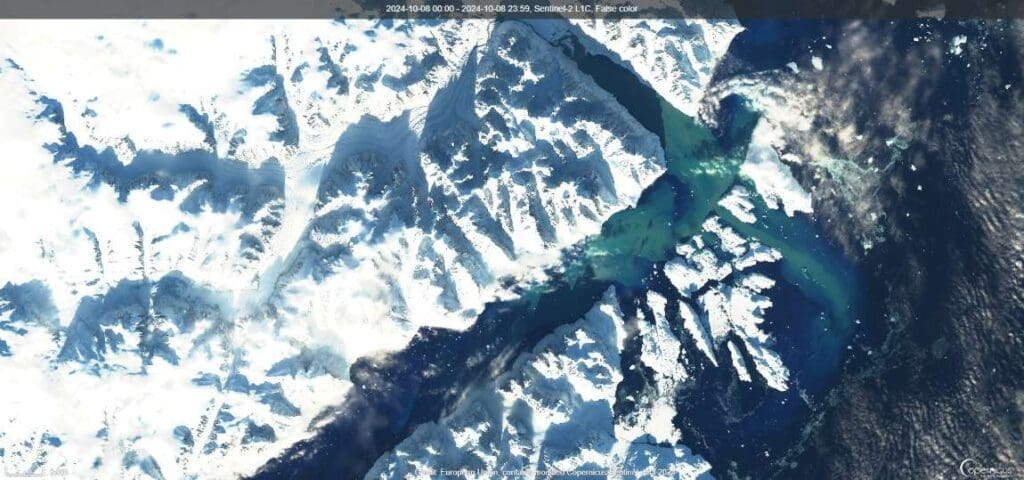
The image shows Teshekpuk Lake and its surrounding landscape using the Copernicus Global Land Cover 2020 dataset, with permanent water bodies depicted in dark blue, herbaceous wetlands and grasslands in green, and extensive moss and lichen cover in yellow. The visualisation reveals how closely water and vegetation are interlinked across the tundra, forming a patchwork that sustains wildlife through seasonal extremes.
These wetlands are increasingly exposed to change. Rising temperatures are thawing permafrost, altering drainage patterns and destabilising the ground beneath vegetation. Along parts of the coast, sea water has pushed inland, contaminating freshwater systems and accelerating erosion. At the same time, nearby oil and gas developments raise concerns about long-term cumulative impacts, including habitat fragmentation, disruption of caribou movement, and pressure on bird populations that depend on undisturbed space.
Today’s image captures more than a remote Arctic scene. It documents a living system where climate, land, and wildlife are tightly connected, and where even subtle changes can ripple across an entire ecosystem.
The land cover data used in this image comes from the Copernicus Global Land Cover 2020 product, produced by the Copernicus Land Monitoring Service. The dataset provides global land cover information at 10-metre resolution, allowing detailed observation of wetlands, water bodies, and vegetation types across the Earth’s surface. Further information about the data and the Copernicus Land Monitoring Service is available here.
Featured image credit: European Union, Copernicus Land Monitoring Service (CLMS)