Summary:
A majority believe climate change-related risks are more likely to affect others than themselves, according to a large meta-analysis published in Nature Sustainability. The study examined how individuals assess their personal exposure to climate risks compared with that of other people and found a consistent pattern of underestimation.
The researchers analysed 60 datasets covering 83 effect sizes from 70,337 participants across 17 countries. In 81 of the 83 datasets, participants rated their own climate-related risk as lower than that faced by others, with a moderate overall effect size. About 65 per cent of participants believed they were less likely than others to be affected by climate change, whether the risks involved extreme weather events or broader climate impacts.
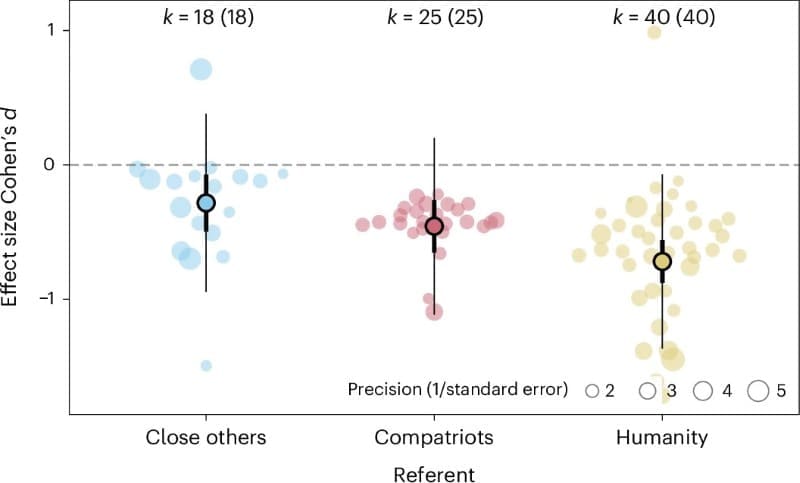
The analysis shows that perceptions vary depending on who people compare themselves with. The discrepancy was smaller when comparisons involved specific individuals, such as neighbours, or populations in high-risk regions like Asia. It was stronger when people compared themselves with broader groups, including fellow citizens or humanity as a whole, particularly in lower-risk regions such as Europe. The findings suggest that widespread misjudgements about personal risk may weaken public engagement with climate adaptation and mitigation efforts.
— Press Release —
Most people believe climate change primarily affects others
A meta-analysis of 83 studies, involving more than 70,000 participants from 17 countries, shows that climate-related risks are systematically underestimated and perceived as more likely to affect someone else rather than oneself. Sixty-five per cent of participants assessed their own risk of being affected by climate change as lower than that of others.
“The studies we have compiled do not measure people’s actual risk. We cannot determine whether individual risk assessments are overly optimistic, but at the group level we clearly see that the majority perceive their own risk as lower than that of others,” says Magnus Bergquist, Senior Lecturer in Psychology at the University of Gothenburg.
Who people compare themselves with matters
A central question in the study concerned whom people compare themselves with. The results show that the choice of reference group plays a significant role, and that risk assessments are most distorted when people compare themselves with ‘general others’, such as fellow citizens or humanity as a whole, as well as in countries with lower overall climate risk.
The researchers observed the effect in Europe, the United States and Asia, but the discrepancy was most pronounced among Europeans.
Experience leads to a more realistic assessment
Eighty-one of the 83 studies included in the meta-analysis showed that participants rated their own risk as lower than that of others or lower than the average, both in relation to extreme weather events and more general climate-related risks.
“We found the effect in all but two studies, where participants were farmers in China and South Korea who had been directly exposed to the consequences of climate change. This suggests that direct experience reduces the effect,” explains Pär Bjälkebring, Senior Lecturer in Psychology at the University of Gothenburg.
Misjudged risk delays climate action
Overall, the results of the meta-analysis on how people perceive climate-related risks indicate that our understanding is limited and flawed, which may delay necessary action.
“Even when people recognise the real risks posed by climate change, many seem to perceive these risks as primarily affecting others. This is a psychological bias that, in the worst case, can slow down both climate adaptation and mitigation efforts,” says Bergquist.
Journal Reference:
Sandlund, I., Bjälkebring, P. & Bergquist, M., ‘Meta-analytical evidence of a self–other discrepancy in climate change-related risk perceptions’, Nature Sustainability (2026). DOI: 10.1038/s41893-025-01717-3
Article Source:
Press Release/Material by University of Gothenburg
Featured image credit: Kritsada Seekham | Pexels