
Explore the latest insights from top science journals in the Muser Press roundup (January 22, 2026), featuring impactful research on climate change challenges.
In brief:
— Press Release —
How shifting tectonic plates drove Earth’s climate swings
Published in Communications Earth and Environment, a new study, led by researchers at the Universities of Melbourne and Sydney, reconstructed how carbon moved between volcanoes, oceans and deep within the Earth over the last 540 million years.
It provides insight into the magnitude of our rapidly changing climate today.
Lead researcher University of Melbourne Dr Ben Mather from the School of Geography, Earth and Atmospheric Sciences said the findings challenge a long-held view that chains of volcanoes – formed by colliding tectonic plates – were the Earth’s main natural source of atmospheric carbon.
“Our findings show that carbon gas released from gaps and ridges deep under the ocean from moving tectonic plates was instead likely driving major shifts between icehouse and greenhouse climates for most of Earth’s history,” Dr Mather said.
“We found that carbon emitted from volcanoes, around the Pacific ring of fire for example, only became a major carbon source in the last 100 million years, which challenges current scientific understanding.”
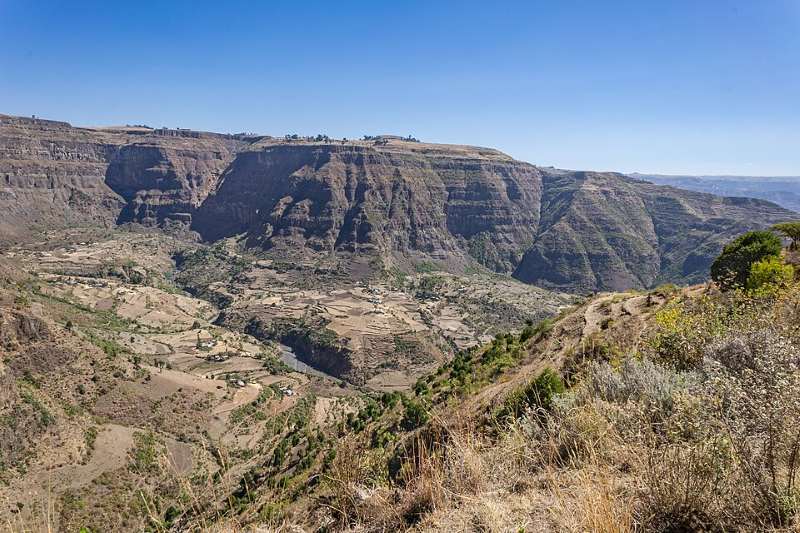
The work provides the first clear long-term evidence that the global climate was shaped mainly by carbon released where tectonic plates pull apart, rather than where they collide.
“This new insight not only reshapes our understanding of past climates but also helps refine future climate models,” Dr Mather said.
Co-author Professor Dietmar Müller from the University of Sydney’s School of Geosciences described that by pairing global plate tectonic reconstructions with carbon-cycle modelling, the team were able to trace how carbon was stored, released and recycled as continents shifted.
“Our study’s findings help explain key historical climate shifts, including the late Paleozoic ice age, the warm Mesozoic greenhouse world, and the emergence of the modern Cenozoic icehouse, by showing how changes in carbon released from spreading plates shaped these long-term transitions to our climate,” Professor Müller said.
Dr Mather said the research provides important context for our currently changing climate.
“This research adds to a large pool of evidence that the amount of carbon in the Earth’s atmosphere is a key trigger to cause major swings in climate,” he said.
“Understanding how Earth controlled its climate in the past highlights how unusual the present rate of change is. Human activities are now releasing carbon far faster than any natural geological process that we’ve seen to have taken place before. The climate scales are being tipped at an alarming rate.”
Journal Reference:
Mather, B.R., Müller, R.D., Dutkiewicz, A. et al., ‘Carbon emissions along divergent plate boundaries modulate icehouse-greenhouse climates’, Communications Earth & Environment 7, 48 (2026). DOI: 10.1038/s43247-025-03097-0
Article Source:
Press Release/Material by University of Melbourne
— Press Release —
By changing their habits, many animals still hanging on in the face of warming
Fred Janzen knows a thing or two about the habits of turtles.
In the late 1980s, when he first started monitoring painted turtles that nest along the flat, grassy banks of the Mississippi River between Iowa and Illinois, females started coming out of the water to lay their eggs in early June. These days, some females are already digging their nests by mid-May.
“In the span of a few decades, the onset of the nesting season was almost two weeks earlier than it had been,” said Janzen, a professor in the Department of Fisheries and Wildlife at Michigan State University.
A new analysis of data on 73 species ranging from songbirds to water snakes published in Nature Communications confirms what researchers like Janzen have reported for some time: animals are changing their habits in the face of warming.
But the study also reveals something surprising: “They’re not just changing their behavior in response to climate change and doing fine,” Janzen said. “They’re actually flourishing.”
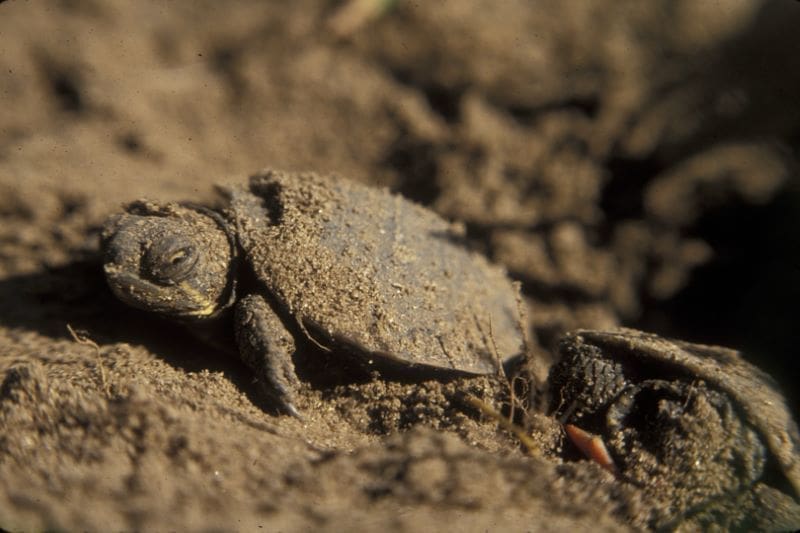
Janzen contributed data on painted turtles to the study, which was led by Viktoriia Radchuk at the Leibniz Institute for Zoo and Wildlife Research in Berlin as part of a collaboration between more than 80 scientists from 18 countries.
That animals are affected by weather is no surprise. As climate change alters the timing of the seasons, many animals are changing when they migrate, hibernate, reproduce and other rhythms of life. But whether these shifts will help them avoid extinction, and which species are more able to make adjustments, has been less clear.
Addressing questions like these isn’t easy, the researchers said. Take turtles: the scientists needed years of data, and not just on when they did things like dig their nests, and how those behaviors have shifted with climate. But they also needed estimates of population size so they could figure out if turtle populations grew or shrank as a result.
For the study, the researchers scoured the results of 213 animal studies looking for information on how they responded to changes in temperature, and what this meant for their numbers over time.
Across studies, they found that most species shifted their timing in warmer years. The analysis includes data showing that red deer on Scotland’s Isle of Rum are giving birth earlier in the year than they did a few decades ago. Hibernating marmots in Colorado are emerging sooner from hibernation. And great tit chicks in the United Kingdom are hatching out ahead of their normal schedule, among others.
But by analyzing decades of population trends on things like migrating falcons, rutting deer, and birthing bighorn sheep, the scientists discovered that most species that have shifted their habits are also managing surprisingly well – maintaining or even increasing their numbers despite warming.
While this is promising news, Janzen cautions that the results are no guarantee that animals will cope with climate change indefinitely.
“We’re not saying that animals have this problem solved,” Janzen said.
He added that even the most flexible or adaptable species will have limits. “Plasticity can be exhausted,” Janzen said. “Assuming that everything’s always going to be okay would be a mistake.”
“You can only compensate so much with what your genotype allows,” said Janzen, a core faculty in MSU’s Ecology, Evolution, and Behavior Program who directed the Kellogg Biological Station for most of the past five years.
Since the majority of data were from warm-blooded animals like birds and mammals, Janzen said it would be interesting to see how the results held up under an analysis including more cold-blooded species like turtles and other reptiles, which often aren’t able to use their bodies to keep their developing babies within suitable temperatures.
Janzen also said it’s gratifying to know that, since his first days watching nesting females on the banks of the Mississippi at what he and his students dubbed “Turtle Camp,” other scientists have begun to harness their data for a range of research projects. “These data live on into the future for smart people to use for other questions. So I’m really happy about that.”
Journal Reference:
Radchuk, V., Jones, C.V., McLean, N. et al., ‘Changes in phenology mediate vertebrate population responses to temperature globally’, Nature Communications 17, 479 (2026). DOI: 10.1038/s41467-025-68172-8
Article Source:
Press Release/Material by Robin Smith | Michigan State University (MSU)
— Press Release —
Safeguarding the Winter Olympics-Paralympics against climate change
The University of Waterloo led the study, in collaboration with researchers at the University of Innsbruck and the University of Toronto, and it builds on their influential work to determine reliable locations for the Winter Games as global warming accelerates.
The team analyzed the 93 potential host locations where the International Olympic Committee (IOC) indicated the necessary winter sports infrastructure was already in place. They found that if countries continue with current climate policies, only 52 would remain climate-reliable for the Olympics and 22 for the Paralympics.
“Climate change is altering the geography of where the Winter Olympics and Paralympics can be held. We have to prioritize solutions to the much greater risk facing the Paralympics and explore ways that the One Bid, One City partnership can survive in an era of climate change,” said Dr. Daniel Scott, professor in the Faculty of Environment at Waterloo and the lead author on the paper.
The researchers examined a range of climate change adaptation strategies. Merging the Olympics and Paralympics in February would be very difficult because of the sheer size of the combined Games and the complexity of holding nearly double the number of competitions. The team found that by shifting both the Olympic and Paralympic Games to earlier dates, the number of climate-reliable locations for the Paralympics would increase to 38.
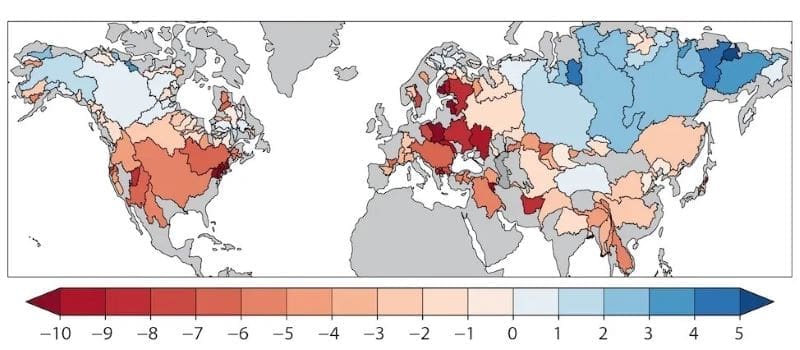
“Our models show a big difference when both games are shifted forward by a few weeks so that the Paralympics begin in the last week of February,” said Dr. Robert Steiger, professor in the Department of Public Finance, University of Innsbruck. “This move is a very promising option to protect the fairness and safety for Paralympic athletes.”
The researchers also emphasized the importance of snowmaking as a climate-adaptation strategy and found that without it, the number of potential hosts declines to only four by the 2050s.
“There have been criticisms of the reliance on snowmaking in Beijing and other recent Games, but not employing it is no more an option than is moving hockey, figure skating, and curling back outside,” Scott said. “Abandoning snowmaking would result in a major increase in unfair and unsafe conditions for athletes, cancelled competitions, and eventually a Winter Games without any snow sports.”
The IOC’s Sustainability Agenda 2020+5 seeks to inspire and assist the development of sustainable sport worldwide and drive climate action that supports the Paris Climate Agreement. The accord’s goal is to limit global warming to well below 2 °C above pre-industrial levels.
“No sport can escape the impacts of climate change,” said Dr. Maleleine Orr, a professor in the Faculty of Kinesiology and Physical Education at the University of Toronto. “The world’s best athletes, who have dedicated their lives to sport, deserve nothing less than the best conditions that can be provided sustainably. The winter sport community must work together to find solutions to adapt to climate change and achieve the goals of the Paris Climate Agreement.”
The study appears in the journal Current Issues in Tourism. The IOC adopted recommendations from the team’s previous study, entitled ‘Climate change and the climate reliability of hosts in the second century of the Winter Olympic Games’, which appears in the same journal.
Journal Reference:
Scott, D., Steiger, R., & Orr, M., ‘Advancing climate change resilience of the Winter Olympic-Paralympic Games’, Current Issues in Tourism 1–8 (2026). DOI: 10.1080/13683500.2026.2617880
Article Source:
Press Release/Material by University of Waterloo
— Press Release —
Creative outdoor advertising boosts climate and sustainability engagement
Researchers investigating the effectiveness of outdoor ads promoting climate change awareness and action found that a general message of climate emergency awareness received more QR code scans compared to a more-specific campaign focusing on sustainable fashion, according to a study published in the open-access journal PLOS Climate by Maxwell Boykoff from the University of Colorado Boulder, USA, and colleagues.
Advertising can help shape public opinion, for better or worse. Climate advocates and climate change activists are now using advertisements to promote their messages to the public. In this study, Boykoff and colleagues attempted to gauge the public impact of a real-world climate advocacy campaign.
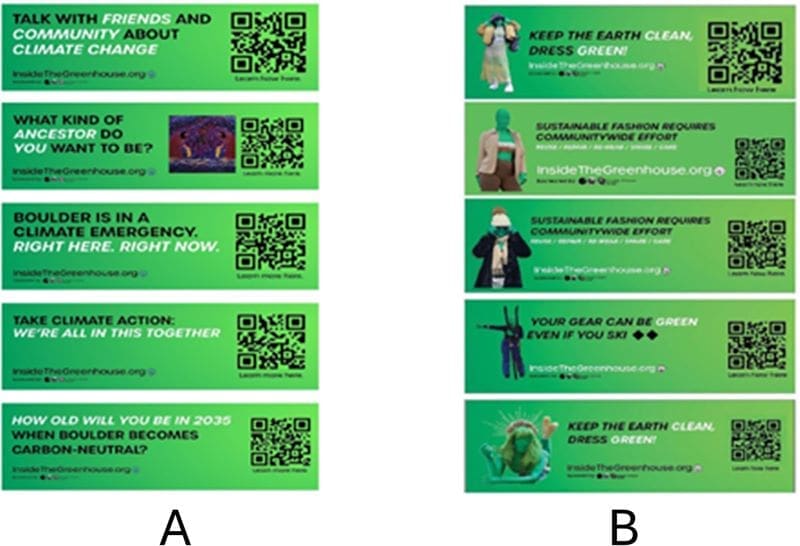
The authors analyzed QR code scan data from two waves of a real-world advertising campaign designed to raise climate change awareness that ran from November 2022 through February 2023 in a targeted area in the Southwest of the United States. According to US Census data, the median age in the targeted area at the time the experiment ran was 37.5 years old, with a poverty rate of about 11%, an unemployment rate of 4.5% and an average commute time of 23.2 minutes through various modes of transportation. Ethnically, the targeted population was 75% white, 15% Hispanic/Latino, 5% Asian, and 1% Black/African American.
There were large and medium sized advertisements in both English and Spanish which ran on the exterior as well as interior of buses, as well as static billboards. The first wave of advertisements were all generalized messages such as: “Take climate action: we’re all in this together” or “Boulder is in a climate emergency. Right here. Right now.” The second wave of advertisements were more specific and related to environmental issues in the fashion industry, such as: “Sustainable fashion requires community-wide effort” or “Your gear can be green even if you ski [black diamonds]”.
Overall, public engagement was higher for the general climate change action messages than for the sustainable fashion messages, though the differences were not always statistically significant; for the largest exterior bus ads, this difference was statistically significant and general messages were 3 times more likely to be scanned compared to sustainable fashion messages. For ads with the same message but different formats, static billboards were almost 2.5 times more likely to receive QR code scans compared to any other format; billboards and the larger exterior bus ads were the most-scanned formats for ads, with engagement significantly increasing as advertisement sizes increased.
The results have some limitations: for instance, there was no control group or comparison with other locations, and there was no information collected regarding the members of the public scanning the codes due to privacy concerns.
The authors hope that future pro-environmental communications experiments are able to build on their results in order to create successful campaigns.
Lead author Maxwell Boykoff says: “This study was a great example of interdisciplinary collaborations – through advertising, the arts and environmental studies and sciences – that is needed to address intersecting climate change considerations relating to human engagement going forward.”
Boykoff adds: “This research provides insights for ongoing research to understand the utility of advertising – by carbon-based industry, by groups seeking to inspire greater pro-environmental behavior – that seeks to shape and influence awareness and behavioral action. This study contributes to ongoing pursuits to better understand the interactions between communication, (mis/dis)information-sharing, education and literacy in contemporary society.”
Journal Reference:
Boykoff M, Gangadharbatla H, Osnes-Stoedefalke B, ‘How advertising matters: Outdoor media strategies for increased engagement with creative climate change messages’, PLOS Climate 5 (1): e0000645 (2026). DOI: 10.1371/journal.pclm.0000645
Article Source:
Press Release/Material by PLOS
Featured image credit: Freepik (AI Gen.)