
Explore the latest insights from top science journals in the Muser Press roundup (March 17, 2026), featuring impactful research on climate change challenges.
In brief:
— Press Release —
Changing flight paths could slash aviation’s climate impact, study suggests
A new study, led by researchers at the University of Cambridge, suggests that changing cruising altitude by a few thousand feet, either up or down, could prevent contrails from forming. Reducing or avoiding contrail formation in this way would also be faster and cheaper than other climate mitigation measures for the aviation industry, since the practice can be adopted with existing aircraft and fuel.
However, the researchers say that time is of the essence, and that the sooner airlines adopt contrail avoidance policies, the bigger the positive climate impact will be. Their results are reported in the journal Nature Communications.
Contrails are the thin white streaks seen behind aircraft flying at high altitude, and form when hot exhaust gases mix with cold, humid air at cruising altitude. Under the right conditions, the water vapour freezes into ice crystals, forming clouds that can persist for hours.
Contrails also trap heat in the atmosphere. Aviation contributes around 2–3% of global carbon dioxide emissions, but its total climate impact is larger because of non-CO₂ effects such as contrails. Interest in contrail avoidance has grown rapidly in recent years as governments and airlines search for ways to reduce aviation’s climate impact while the sector transitions to lower-carbon fuels.
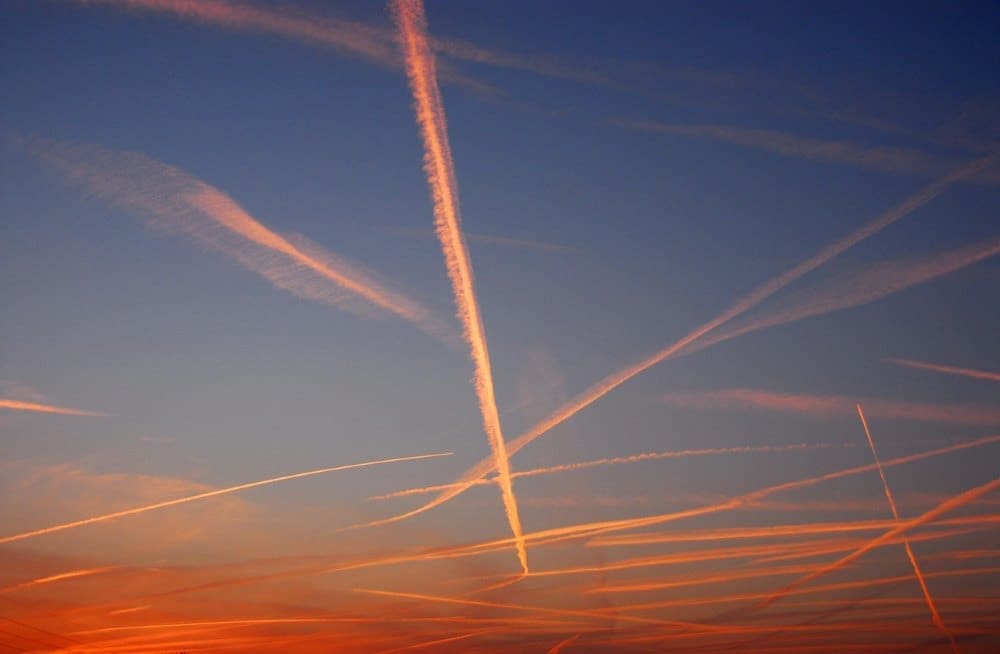
“Contrail avoidance can often be as simple as changing the flight paths,” said lead author Dr Jessie Smith, from Cambridge’s Department of Engineering. “Often it’s even simpler than that – just moving slightly to a higher or lower altitude to avoid the areas of the atmosphere where contrails form.”
Smith and her colleagues modelled how altitude adjustments for contrail avoidance could affect aviation’s overall climate footprint. They found that such a programme, phased in between 2035 and 2045, could recover around 9% of the temperature budget the world has left before breaching the Paris Agreement’s 2 °C limit.
However, they also found that if no action is taken, by 2050 aviation contrails will have added around 0.054 °C of warming – 36% more than the warming attributable to aviation CO₂ over the same period.
“What surprised me was how quickly the temperature saving could be made,” said Smith. “Over a decade, you can take a really big chunk of aviation’s warming impact out very rapidly. That’s unusual in climate science, where most changes take a very long time.”
The researchers also found that while rerouting aircraft can increase fuel use slightly, the reduction in warming from fewer contrails would more than offset the extra carbon dioxide emissions.
Implementing contrail avoidance would require airlines and air traffic controllers to adjust routes dynamically based on atmospheric conditions. Some aviation experts have raised concerns about whether such changes could increase workload for air traffic management systems, but the researchers say the adjustments required may be relatively modest.
Flights already alter their routes or altitude to avoid turbulence or bad weather, meaning similar systems could potentially be used to avoid contrail-forming regions.
“It’s an operational change, not a technological one,” said Smith. “You don’t need to modify aircraft. You just need to work out how it will operate, and then the system is already built for it – pilots do these manoeuvres all the time. That’s why we have more hope for this than for other interventions like sustainable aviation fuels, which face enormous infrastructure and supply-chain hurdles.”
Using a climate model that tracks temperature responses across 10,000 simulated scenarios, the researchers found that beginning contrail avoidance in 2035 rather than 2045 produces a temperature reduction at 2050 that is equivalent to roughly a 78% improvement in effectiveness. “In other words, waiting a decade has roughly the same effect as making the programme almost five times less efficient,” said Smith.
While more work is needed to improve forecasts of the atmospheric conditions that cause contrails and to better understand their climate effects, the researchers say that imperfect avoidance – even at 25% effectiveness – still delivers a meaningful climate benefit, and that starting early matters more than waiting for the technology to be perfected.
Scaling up contrail avoidance will require coordination from pilots, air traffic controllers, weather forecasters and policymakers, however. “The first step is demonstrating this works on a large scale through testing,” said Smith. “Once that’s done, the policy can follow. But the modelling shows clearly that you do not want to wait for perfect conditions before you begin.”
Smith said the findings show the approach could play a major role in aviation’s climate strategy. “We’re not saying it solves everything,” she said. “But it could make a very big difference.”
Journal Reference:
Smith, J.R., Grobler, C., Hodgson, P.J. et al., ‘The climate opportunities and risks of contrail avoidance’, Nature Communications 17, 2092 (2026). DOI: 10.1038/s41467-026-68784-8
Article Source:
Press Release/Material by Sarah Collins | University of Cambridge
— Press Release —
Coastal ocean chemistry now substantially shaped by humans
A global analysis of more than 2,300 seawater samples from more than 20 field studies around the globe indicates that human-made chemicals make up a significant portion of organic matter in coastal oceans.
The international study, led by biochemists Jarmo Kalinski and Daniel Petras at the University of California, Riverside, analyzed seawater samples collected over a decade from coastal regions from the Pacific, Atlantic, and Indian Oceans. Reported in Nature Geoscience, the findings show that industrial chemicals, many of which are rarely monitored, are far more abundant and widespread than previously recognized.
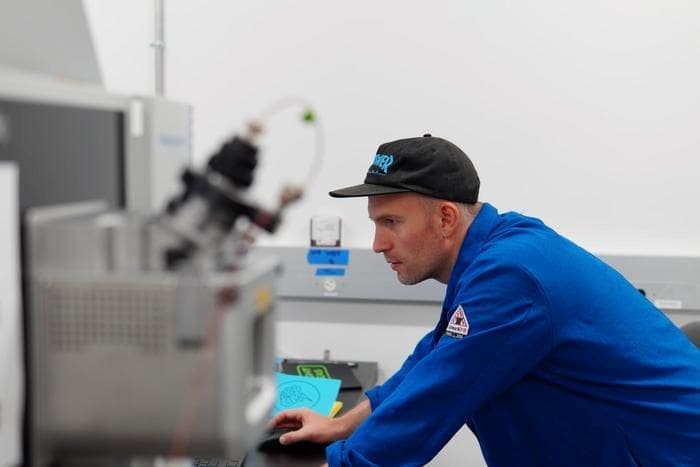
“For decades, scientists have tracked plastic debris floating on the ocean’s surface and measured rising temperatures that signal climate change,” said Petras, an assistant professor of biochemistry. “But another, largely invisible human footprint has been accumulating in the sea: thousands of synthetic chemicals. Even in places we consider relatively pristine, we found clear chemical fingerprints of human activity. The extent of this influence was surprising.”
According to Petras, even remote coral reef systems, often viewed as among the most pristine marine environments, showed clear chemical signatures of nearby human activity – from agricultural and coastal development to tourism.
“There was virtually nowhere we sampled that showed no human chemical influence,” said Kalinski, a postdoctoral researcher in Petras’ group.
The study found that in datasets from coastal environments, median signal levels of human-made organic molecules reached up to 20%, compared to lowest values of about 0.5% in the open ocean. In extreme cases, such as river mouths impacted by untreated or poorly treated wastewater, that figure exceeded 50%. Across all samples, 248 human-derived compounds made up a median of ~2% of the total detected signal.
While pesticides and pharmaceuticals were expected to be most concentrated near shorelines, the study found that industrial compounds, including substances used in plastics, lubricants, and consumer products, dominate the anthropogenic chemical signal in the ocean.
“Industrial chemicals make up the bulk of the human chemical signal we’re seeing,” Kalinski said.
Petras explained that some of the human-made compounds sit at the boundary between traditional organic molecules and nanoplastics, blurring the line between chemical pollution and plastic pollution.
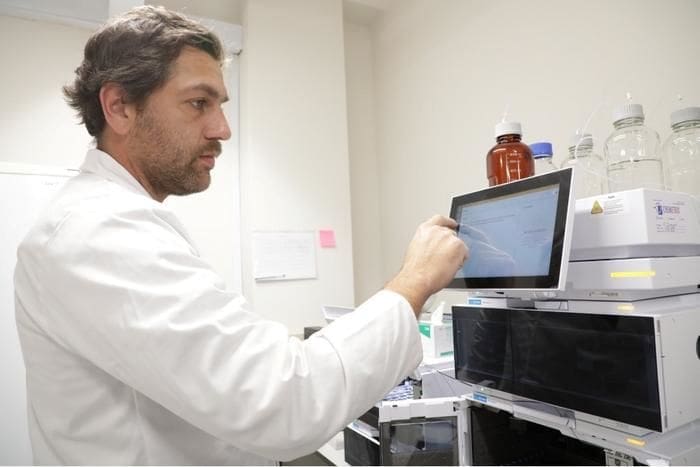
“These chemicals contribute substantially to the ocean’s organic matter pool. That means they may play an unrecognized role in marine carbon cycling and ecosystem function,” he said.
The researchers also found that anthropogenic chemicals persist well beyond the coastline. Even more than 20 kilometers offshore, human-derived compounds accounted for roughly 1% of detected organic matter.
“At a global scale, that’s a huge amount of material,” Petras said.
The study represents one of the most comprehensive chemical meta-analyses of coastal oceans to date, drawing on samples collected for many different research purposes, including coral reef health, algal blooms, and carbon cycling.
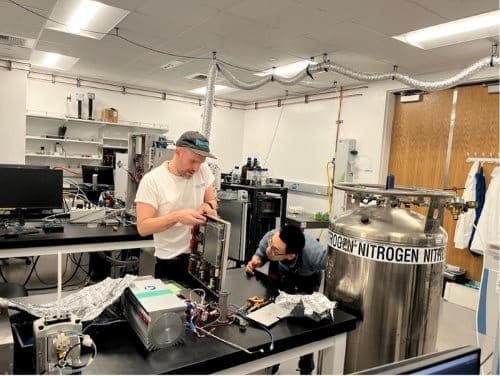
A key innovation the research team used was the combination of consistent, high-resolution mass spectrometry methods across multiple laboratories, as well as the use of scalable computational tools developed by Mingxun Wang, an assistant professor of computer science at UCR. Thanks to these technological advances, the group was able to combine and analyze thousands of samples from unrelated studies as a single, unified dataset.
“This work was only possible because of the efforts of our collaborators around the globe and open science,” Petras said. “By making our data public, we hope to accelerate research and enable a more complete understanding of human chemical impacts on the ocean.”
All data from the study are publicly available, allowing other researchers to reanalyze the results or integrate new datasets as they emerge.
Despite the size of the dataset, the researchers note that large parts of the world remain understudied. Data were heavily concentrated in North America and Europe, with limited coverage in the Southern Hemisphere and almost no representation from regions such as Southeast Asia, India, and Australia.
“The absence of data doesn’t mean the problem isn’t there,” Kalinski said. “It means we haven’t looked closely enough yet.”
The authors acknowledged that this analysis serves a first overview, and detailed targeted analyses with precise quantification are still needed. Further, the effects of the cumulative chemical concentrations and their long-term ecological impacts remain largely unknown.
“We know humans are altering marine chemistry, but we don’t yet know what that means for marine life, food webs, or ecosystem resilience,” Kalinski said. “Our study provides a foundation for asking those questions.”
The findings also highlight a broader, often overlooked reality: everyday activities, driving, cleaning, food packaging, and personal care contribute chemicals. Washed down drains or carried by rainwater, they move through rivers and wastewater systems and eventually reach the ocean.
“What we use on land doesn’t disappear,” Kalinski said. “It often ends up in the ocean, the final sink.”
The findings have also shaped Petras’ own habits.
“I try to reduce plastic use, avoid excessive packaging, and limit processed foods,” he said. “Not just for environmental reasons, but also because I don’t want unnecessary chemical exposure.”
Journal Reference:
Kalinski, JC.J., Pakkir Mohamed Shah, A.K., Ruiz Brandão da Costa, B. et al., ‘Widespread presence of anthropogenic compounds in marine dissolved organic matter’, Nature Geoscience (2026). DOI: 10.1038/s41561-026-01928-z
Article Source:
Press Release/Material by Iqbal Pittalwala | University of California – Riverside
— Press Release —
Reduced air pollution from climate mitigation could boost crop yields and lower hunger risk
Climate change threatens global food security; however, climate mitigation policies may increase hunger risk by driving competition for land through bioenergy production and afforestation. Based on simulations from six global agroeconomic models, researchers from The University of Tokyo, Ritsumeikan University, Kyoto University, National Institute for Environmental Studies, and E-Konzal Co. Ltd, together with collaborators from other countries, report that the ozone reduction benefits of climate mitigation could partially offset this increase in hunger risk.
Baseline changes in global hunger risk
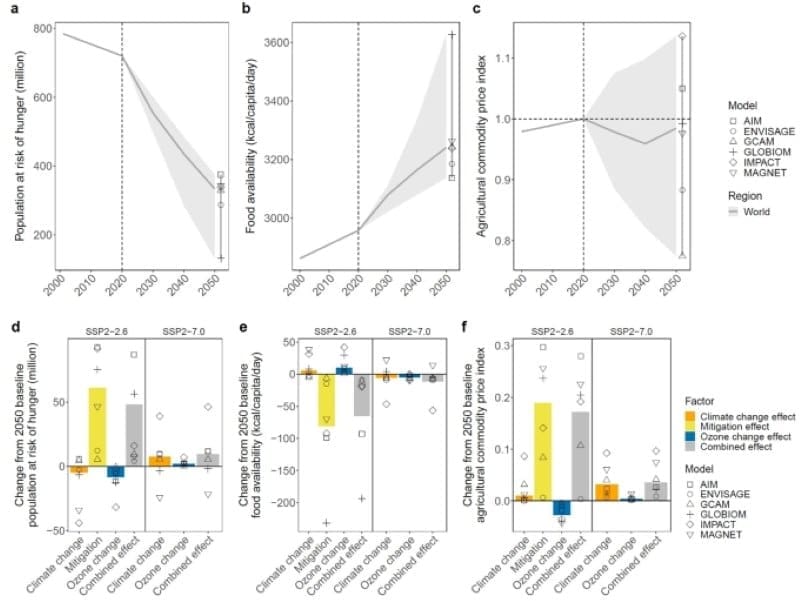
The baseline scenario assumes that today’s climate and air pollution conditions persist and follow SSP2 socioeconomic settings, a “middle-of-the-road” development pathway with moderate population growth and social, economic, and technological trends that broadly follow historical patterns within each region. According to the multi-model median of the six global agroeconomic models, food availability will increase by 2050 in the baseline scenario, decreasing the global hunger risk. Compared with 2020, the number of people at risk of hunger will fall by approximately 390 million by 2050, reaching approximately 330 million by 2050 (Fig. 1a–c).
Climate mitigation increases hunger risk
Compared with the baseline scenario, the 1.5 °C climate target scenario (SSP2-2.6) introduces carbon pricing and other climate mitigation measures that substantially raise production and agricultural commodity prices (Fig. 1f), to a greater extent than in the warming scenario (SSP2-7.0). Consequently, food availability will decline (Fig. 1e), and the global population at risk of hunger by 2050 is projected to be approximately 56 million higher than the baseline (Fig. 1d).
Ozone reduction partially offsets the negative effects of mitigation
The same mitigation policies reduce the emissions of ozone precursors, leading to lower ozone concentrations and higher crop yields. These ozone-driven yield gains reduce food prices and increase food availability. Consequently, approximately 8.4 million of the additional people at risk of hunger (approximately 15% of the mitigation-induced increase) will be offset by ozone reduction in 2050.
Benefits are concentrated in regions with severe hunger today
Regionally, approximately 56% of the hunger-reducing effect of ozone decline occurs in Sub-Saharan Africa and India, where hunger is currently the most severe.
These findings show that jointly assessing climate change, climate mitigation policies, and changes in tropospheric ozone from mitigation allows for a more accurate understanding of the tradeoffs and offsetting effects embedded in climate mitigation. Although previous studies may have overestimated the negative impacts of climate mitigation on food security by neglecting the benefit of ozone reduction, this study confirms that stringent mitigation can still increase hunger risks if land use and price effects are not appropriately managed.
To implement climate policies that limit future increases in hunger risk, it is essential to look beyond greenhouse gas emissions and carbon balances alone and to explicitly incorporate food security impacts at the design stage of mitigation strategies.
Journal Reference:
Xia, S., Hasegawa, T., Jansakoo, T. et al., ‘Ozone pollution reduction partially offsets the negative impact of climate change mitigation efforts on global hunger’, Nature Food (2026). DOI: 10.1038/s43016-026-01322-3
Article Source:
Press Release/Material by National Institute for Environmental Studies (NIES), Japan
Other science articles published recently
García-Witulski C, Rabassa M, Melo O et al., ‘Effects of climate change on physical inactivity: a panel data study across 156 countries from 2000 to 2022’, The Lancet Global Health 14, (4): e500-e511 (2026). DOI: 10.1016/S2214-109X(25)00472-3
Ramiro I. Saurral, Diego A. Campos, Katherine Grayson, Vladimir Lapin, Paloma Trascasa-Castro, Etienne Tourigny, Markus G. Donat, Stefano Materia, Eric Ferrer, Francisco J. Doblas-Reyes, ‘The key role of Mediterranean and North Atlantic sea surface temperatures on the 2024 record-breaking Valencia precipitation event’, Weather and Climate Extremes 52, 100877 (2026). DOI: 10.1016/j.wace.2026.100877
Wang, T., Dong, J., ‘Global crop suitability datasets for 17 crops under present (2024) and future climate scenarios (2041–2100)’, Scientific Data (2026). DOI: 10.1038/s41597-026-06688-4
Ronco, M., Bandelli, L., Bertolini, L. et al., ‘Disaster Storylines and Knowledge Graphs from Global News with Large Language Models and Retrieval-Augmented Generation’, Scientific Data (2026). DOI: 10.1038/s41597-026-07036-2
Li, J., Zscheischler, J. & Bevacqua, E., ‘Global record-shattering breadbasket droughts emerge from moderately extreme regional events’, Nature Communications (2026). DOI: 10.1038/s41467-026-70700-z
Lee, YH., Yeh, SW., Wang, G. et al., ‘Deep ocean control of global temperature after net-zero emissions’, Nature Geoscience (2026). DOI: 10.1038/s41561-026-01934-1
Sieber, P., Karger, D.N., Zimmermann, N.E. et al., ‘Climate response to Nature Future scenarios in a regional Earth System Model’, Nature Communications (2026). DOI: 10.1038/s41467-026-70284-8
Yuan, M., Macdonald, C.A., Hicks, L.C. et al., ‘Strengthened resource limitation driven by accelerated microbial growth dampens response to elevated CO₂ in a mature forest’, Communications Earth & Environment (2026). DOI: 10.1038/s43247-026-03365-7
P.G.C. Ruggiero, P.C. Pereda, & A. Pfaff, ‘When does higher credit lower forest area? Amazon contexts change credit’s impacts’, PNAS 123 (12) e2516366123 (2026). DOI: 10.1073/pnas.2516366123
M.W. Rossi, G.E. Tucker, S.P. Anderson, R.S. Anderson, & J. McGlinchy, ‘Coevolving topography, patchy soils, and forest structure’, PNAS 123 (12) e2519374123 (2026). DOI: 10.1073/pnas.2519374123
S. Wang, H. Xu, & T.S. Weber, ‘Phosphate scarcity governs methane production in the global open ocean’, PNAS 123 (12) e2521235123 (2026). DOI: 10.1073/pnas.2521235123
Y. Zhu, H.S. Anderson, E. Salcedo, S.E. Miller et al., ‘Characterization of phytoplankton-excreted metabolites mediating carbon flux through the surface ocean’, PNAS 123 (12) e2531765123 (2026). DOI: 10.1073/pnas.2531765123
Donmez Bayrakci L, Ozdemir F, ‘Understanding climate refugees from educators’ perspectives: Social studies teachers’ views’, PLoS One 21 (3): e0344777 (2026). DOI: 10.1371/journal.pone.0344777
Bozorg-Omid F, Abbasi M, Yaghoobi-Ershadi MR, Hanafi-Bojd AA, ‘Suitable ecological niches of invasive malaria vector under present and projected climatic conditions in South of Iran’, PLoS Negl Trop Dis 20 (3): e0014054 (2026). DOI: 10.1371/journal.pntd.0014054
Hagan S, Nyhan K, Darkwah E, Agyemang CB, Boafo YA, ‘Socioeconomic, physical and mental health impacts of climate change among informal outdoor workers in sub-Saharan Africa: A scoping review protocol’, PLoS One 21 (3): e0344943 (2026). DOI: 10.1371/journal.pone.0344943
Featured image credit: Freepik (AI Gen.)