Summary:
Ocean warming and changes in ocean stratification help explain the sharp decline in Antarctic sea ice observed since 2015, according to research published in Nature Climate Change. Using around 110,000 hydrographic profiles from the Southern Ocean, combined with atmospheric reanalysis, scientists from the University of Gothenburg show that the shift was driven by a combination of long-term ocean changes and short-term atmospheric forcing.
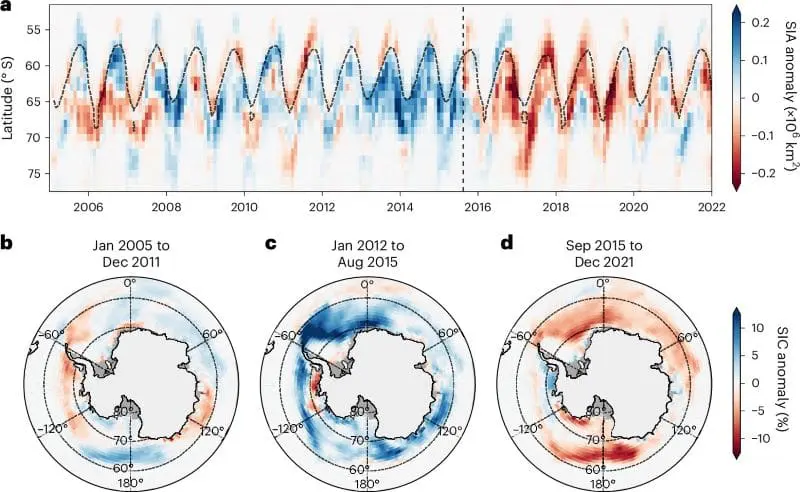
Between 2005 and 2015, a cold subsurface layer known as Antarctic Winter Water (WW) gradually thinned, while warmer deep water moved closer to the surface. This weakened the ocean’s vertical stratification, reducing the barrier that had limited heat transfer toward the sea ice. In 2015, unusually strong winds over the Southern Ocean enhanced mixing across this weakened layer, allowing warm, salty water to reach the surface and trigger rapid sea ice loss.
The study indicates that Antarctic sea ice variability is closely tied to subsurface ocean conditions as well as atmospheric forcing. By identifying how long-term ocean warming interacts with short-term wind-driven mixing, the research points to processes that remain poorly represented in current climate models and are important for improving future projections.
— Press Release —
Rapid melting of Antarctic sea ice largely driven by ocean warming
Antarctic sea ice plays a crucial role in the ecosystem and physical environment of Antarctica and the Southern Ocean. Since the ice reflects the sun’s rays and blocks heat exchange between the ocean and the atmosphere, it is critical to our weather and climate. Therefore, we need to understand what affects its extent to improve future climate models and prediction.
While Arctic sea ice has been steadily declining since satellite measurements of sea ice began, Antarctic sea ice has exhibited a completely different behaviour. After expanding slowly for several decades, Antarctic sea ice declined rapidly in late 2015 and has since experienced large year-to-year fluctuations in extent. Research on this change, led by the University of Gothenburg, is now published in Nature Climate Change.

Protective layer
“There was a protective layer of cold water beneath the sea ice in Antarctica that prevented warmer deep water from rising and melting the ice from below. But during the winter of 2015, storms in the Southern Ocean were unusually strong, reducing the cold-water protective layer effect and resulting in the sustained sea ice loss around Antarctica,” says Theo Spira, former doctoral student in oceanography at the University of Gothenburg and first author to the study.
Water masses with large differences in salinity and/or temperature do not mix easily and settle in layers on top of each other. This is called stratification. The cold Winter Water layer that protects the sea ice becomes increasingly fresh as the ice grows from more sea ice melt, and this increases stratification in relation to the warm and salty water layer below.
Storms stirred things up
This natural protection contributed to long-term growth in Antarctic Sea ice until 2015. However, under the ice the Winter Water layer slowly got thinner as the deep water got warmer, weakening the ocean’s protective cool layer.
“With the help of almost two decades of observations, I can see that the Winter Water layer has thinned over large parts of the Southern Ocean, allowing the deep, warm water to approach the surface. The storms in 2015 stirred up the sea and warmer water mixed with the cold-water layer, the protection disappeared and the ice melted at record speed,” says Spira.
Elephant seals help scientists
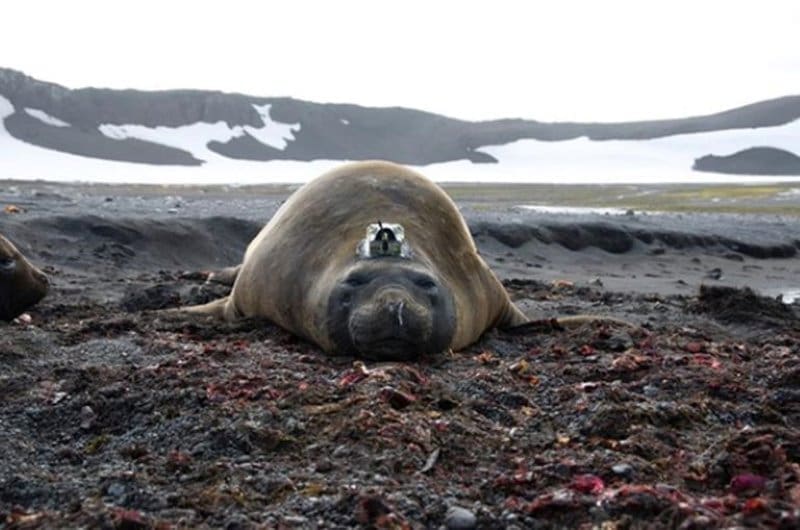
The Southern Ocean is a remote environment for research, far from inhabited areas. Theo Spira used autonomous marine robots to measure temperature and salinity in the ocean water but also enlisted the help of elephant seals living in the area. Sensors were attached to their bodies, which accompanied them on their long dives hundreds of metres down into the ocean. After 10 months, the sensor detaches from the elephant seal.
“This is valuable because elephant seals live within and at the edge of the sea ice in Antarctica and can provide data on the stratification of the water there. Winter Water acts as a gatekeeper for heat exchange between the deep ocean and the surface, and by quantifying its role, my research identifies processes that are missing or poorly represented in today’s climate models,” says Spira.
Journal Reference:
Spira, T., du Plessis, M., Haumann, F.A. et al., ‘Wind-triggered Antarctic sea-ice decline preconditioned by thinning Winter Water’, Nature Climate Change (2026). DOI: 10.1038/s41558-026-02601-4
Article Source:
Press Release/Material by Olof Lönnehed | University of Gothenburg
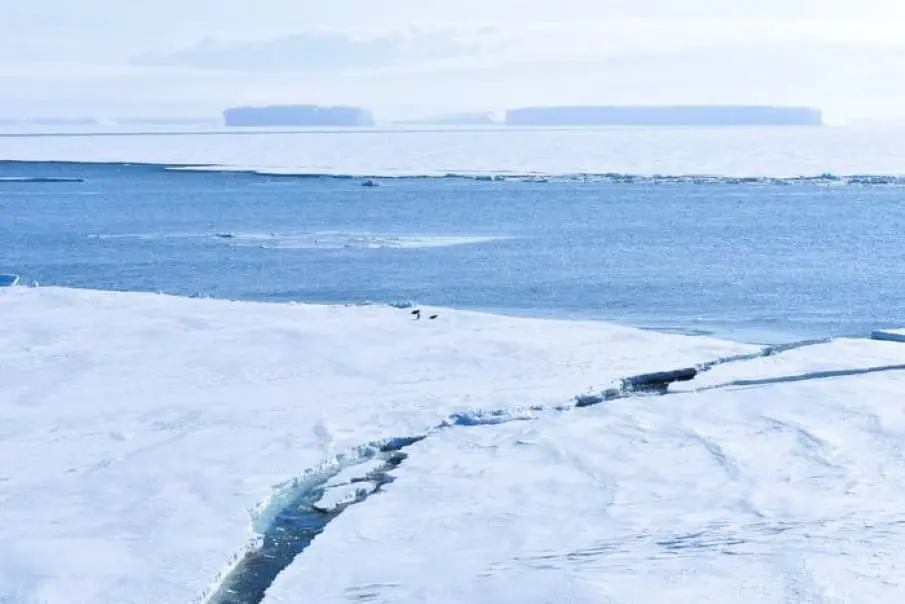
Featured image: The Antarctic sea ice is getting thinner in recent years. Credit: Theo Spira