Koror, Palau | AFP | Muser NewsDesk
Noting last week’s deadly floods in Nepal, United Nations Deputy Secretary-General Amina Mohammed said rising seas in the Pacific were the “other side of that story”.

“We do already know that a warming climate is changing the world’s ice at extraordinary speeds, not only threatening the communities below glaciers but adding more water to our oceans,” she told reporters.
Mohammed was speaking in Palau, where Pacific leaders have gathered for an annual summit to discuss challenges including climate change, crime and regional security.
The United Nations is pushing for G20 leaders to attend and make commitments at a meeting hosted by the tiny nation of Tuvalu in October, ahead of the upcoming UN climate summit in Turkey, according to Mohammed.
“We think they should turn up and really engage with the world on what they need to do,” she said, even though there are concerns few leaders outside the Pacific will make the trip.
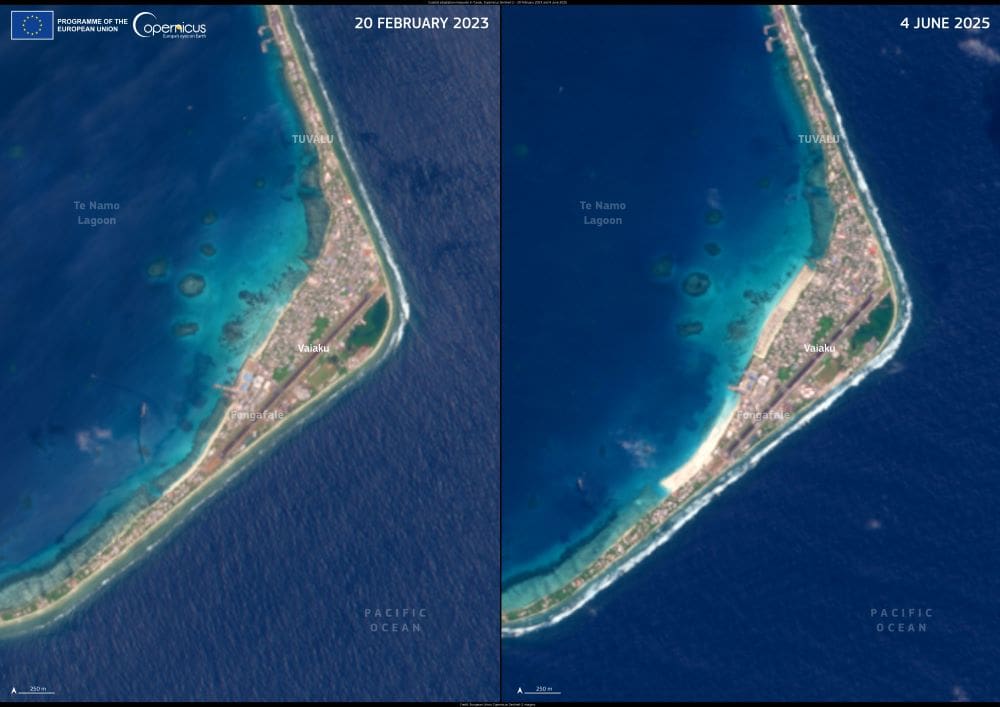
Tuvalu, which is among the most vulnerable countries in the climate crisis, is preparing to relocate its population after scientists predicted most of its land may become inundated.
Palau’s minister for the environment Steven Victor said the Pacific was “not begging for any handouts”, but had fewer resources to deal with rising seas that threaten its communities the most.
“We need them to come and see,” he said.
Read also: Snorkel with me to understand climate change, Palau president tells Trump
A UN report published Monday showed a record pace of sea-level rise driven by warming oceans and glacier melt.
Up to 1.2 billion people could be displaced by 2050, with Pacific island countries experiencing sea level rise at twice the global average, it said.
It also highlighted a financing gap, with developing countries needing $310-$365 billion to adapt, yet having only $26 billion in adaptation finance available in 2023.

Coral reefs under pressure
Coral reefs are facing a “staircase of decline”, with global hard coral cover declining 9.5 percent due to climate change over 40 years, another report released Monday in Palau by scientists found.
The Global Coral Reef Monitoring Network analysed data from 37,000 reefs in 120 countries, finding a narrowing window between major bleaching events.
Although reefs can recover after bleaching if they have enough time, the frequency of marine heatwaves means only partial progress is made.
The study found a major bleaching event every five to six years since 2010.
“We are steadily eroding the conditions they need to recover,” said the study’s lead author Manuel Gonzalez Rivero.
“Climate change is driving more frequent and severe marine heatwaves, but local pressures such as poor water quality, overfishing and coastal development are making reefs even less able to withstand them,” he added.
Among the worst affected are reefs in Australia, the Pacific and Caribbean.
Around 100 million people live within five kilometres (3.1 miles) of a coral reef, a 46 percent increase over two decades.
The ocean was a highway for Pacific nations, connecting its people, but was in crisis, Palau’s President Surangel Whipps said on Sunday.
Read also: Will rising seas doom the Great Barrier Reef? Ancient reef record offers clues
Article Source:
Press Release/Material by Agence France-Presse
Featured image credit: Florian Kriechbaumer | Pexels