The global food system is one of the largest contributors to greenhouse gas emissions, making the reduction of these emissions a top priority for climate policy.
Researchers at the International Institute for Applied Systems Analysis (IIASA) have explored the potential for carbon sequestration on agricultural lands, offering valuable insights into how these practices can mitigate climate change while lowering the costs of reducing emissions.
Carbon sequestration on farmland involves capturing and storing atmospheric carbon dioxide (CO2) in soils and plants.
According to a new study published in Nature Food, these practices offer significant promise in curbing global warming.

Lead author Stefan Frank, a senior researcher at IIASA, explains: “We set out to assess novel carbon sequestration options on agricultural land and their dynamics in an economic model. To date, these options were only assessed in bottom-up engineering studies and hence not considered in Integrated Assessment Model-based climate stabilization pathways that underpin the forward-looking chapters of the reports of the Intergovernmental Panel on Climate Change (IPCC).”
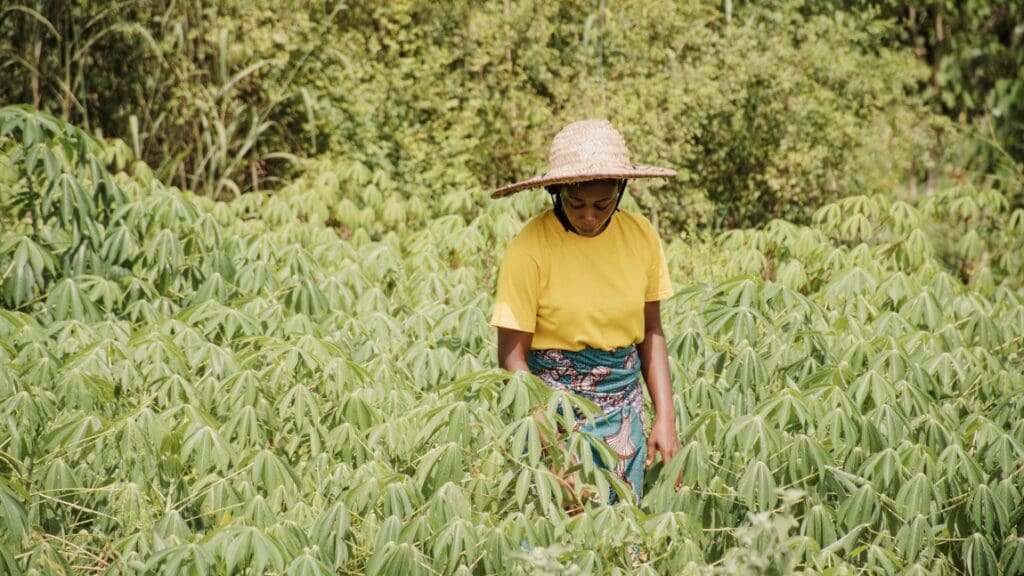
Farmers can utilize several techniques to enhance carbon capture on their land, such as planting cover crops, incorporating biochar into soils, and practicing agroforestry, which involves planting trees alongside crops or pastures. These methods can turn agricultural land into a carbon sink, absorbing more CO2 than it emits. By 2050, the study indicates that these practices could achieve reductions in greenhouse gas emissions comparable to those from reforestation efforts, particularly in regions such as sub-Saharan Africa and South America.
In addition to reducing emissions, carbon sequestration in agriculture could help boost productivity and resilience to climate change. It could also contribute to achieving net-zero emissions in the agriculture, forestry, and land use sectors by 2050, at an estimated cost of $80 to $120 per ton of CO2 equivalent.
“These efforts would not only cut overall economy-wide emission reduction costs when compared to a 1.5°C scenario without agricultural carbon sequestration practices, but also reduce losses of global economic output by 0.6% by mid-century under a climate stabilization scenario aiming to limit warming to 1.5°C,” says study co-author Andrey Lessa Derci Augustynczik of IIASA.
The study also highlights the economic opportunities for farmers. By 2050, farmers could potentially earn up to $235 billion if provided financial incentives for every ton of CO2 sequestered. At a projected greenhouse gas price of $160 per ton by 2050, carbon farming could become a lucrative endeavor for many agricultural producers.
However, realizing this potential comes with challenges. Most of the mitigation potential is located in the Global South, where structural, institutional, and social barriers could impede progress. The researchers emphasize the need for robust institutions and monitoring systems to ensure that farmers implement these practices correctly and are fairly compensated for their efforts.
“To unlock these potentials and provide meaningful contributions to ambitious climate stabilization efforts, highly efficient institutions and monitoring systems must be deployed in the short-term and the necessary policy incentives need to be put in place fast,” Frank concludes.
The findings highlight the critical role agriculture can play in addressing climate change, not only as a sector to mitigate emissions but also as one that could significantly benefit from such transformations. By turning farmland into a carbon sink, the agriculture sector can become part of the solution to the global climate crisis.
Journal Reference:
Frank, S., Lessa Derci Augustynczik, A., Havlík, P., Boere, E., Ermolieva, T., Fricko, O., Di Fulvio, F., Gusti, M., Krisztin, T., Lauri, P., Palazzo, A., Wögerer, M., ‘Enhanced agricultural carbon sinks provide benefits for farmers and the climate’, Nature Food 5, 742–753 (2024). DOI:10.1038/s43016-024-01039-1
Article Source:
Press Release/Material by IIASA
Featured image credit: rawpixel.com | Freepik