Summary:
Extreme climate impacts at 2 °C of global warming could exceed expectations based on higher warming scenarios, according to a study published in Nature. Researchers led by the Helmholtz Centre for Environmental Research (UFZ) show that sector-specific worst-case outcomes can be more severe than the model averages typically associated with 3 °C or 4 °C warming.
The study examines key climate impact drivers including droughts in major agricultural regions, heavy rainfall in densely populated areas, and fire-conducive weather in forests. Instead of relying on averaged projections, the researchers analysed individual climate model outcomes to identify the most extreme scenarios across sectors and regions.
In several cases, these worst-case projections at 2 °C exceed the average impacts projected at higher levels of warming. The results are particularly significant for food production, where some models indicate drought frequency in major crop-growing regions could increase by more than 50%. Comparable patterns are observed for extreme rainfall and fire weather.
The researchers say that focusing on model averages may underestimate risks and create a false sense of security. Even moderate warming can produce severe regional impacts, highlighting the need for stronger mitigation and more detailed climate risk assessments.

— Press Release —
Extreme global climate outcomes are possible even at 2 °C of warming
Because climate models still involve considerable uncertainties, it cannot be ruled out that the global climate could develop far more dramatically than expected.
“In the interest of responsible risk assessment, we should therefore look beyond the most likely ranges projected by climate models and consider extreme outcomes that could have severe societal or environmental consequences,” says lead author and UFZ climate researcher Dr Emanuele Bevacqua. Until now, these worst-case “extreme global climate outcomes” have typically been described using the average results of many climate models at high levels of global warming (3 or 4 °C).
However, this approach does not take into account the fact that even at moderate levels of global warming, individual climate projections for certain regions can be very severe. “Furthermore, weather patterns in neighbouring regions tend to be strongly correlated, whereas those in distant regions are largely uncorrelated. This makes it difficult to infer global risks from local uncertainty estimates,” says co-author Prof Dr Jakob Zscheischler, climate researcher at the UFZ and Professor for Data Analytics in Hydro Sciences at TUD Dresden University of Technology.
The researchers therefore adopted a new approach for their study: they identified sector-specific drivers of climate impact such as precipitation extremes and droughts as well as regions where vulnerable sectors (e.g. forests, agriculture, and densely populated areas) are located. Combining these factors makes it possible to examine climate changes in locations where they are particularly relevant for specific global risks.
For example, they analysed heavy rainfall in densely populated regions, droughts in major global agricultural regions, and fire-conducive weather in forests. To do this, they evaluated global simulations from many different climate models, which also form the basis of the reports of the Intergovernmental Panel on Climate Change (IPCC). In this way, they were able to identify the model projections that show the strongest (worst-case) and the weakest (best-case) outcomes respectively for each sector examined.
The key finding: for each of the three global domains examined (heavy rainfall in densely populated regions, droughts in global agricultural regions, and fire-conducive weather in forests), some individual climate model projections show considerably greater changes at 2 °C of warming than the average across all models at 3 °C or even 4 °C. This is particularly evident in relation to food security, by focussing on growing regions that account for a large share of global production of maize, wheat, soy, and rice. In this area, the climate models show very large differences.
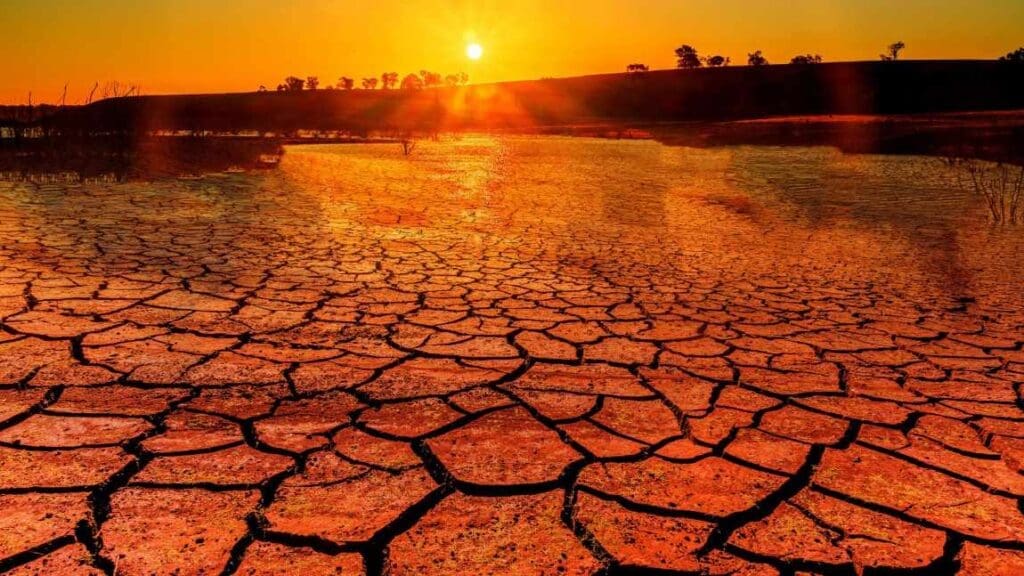
Depending on the model, the frequency of droughts at 2 °C of warming may remain unchanged or increase by more than 50%. “At 2 °C, 10 of the 42 models examined produce a drought increase that is considerably above the model average at 4 °C of warming,” says Bevacqua. The risk of droughts in globally important growing regions is therefore much higher than would be expected from an analysis of model averages.
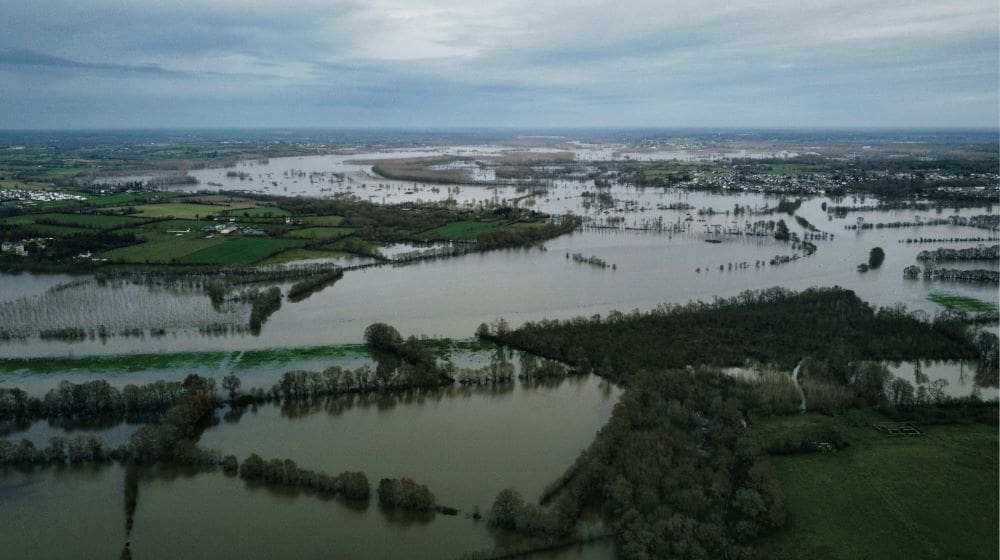
Given their importance for food security, global supply chains, and international markets, the consequences of such extreme climate developments need to be examined more closely. In the domains ‘heavy rainfall in densely populated regions’ and ‘extreme fire weather in forested areas’, the worst-case models at 2 °C also show climate trends that exceed the average changes at 3 °C of warming.
The wide range of results is due mainly to differences between climate models rather than natural climate fluctuations. “Because climate model projections are uncertain, extreme climate outcomes remain possible even at 2 °C global warming and are often underestimated when attention is focused on model averages. This reliance on model averages can contribute to a false sense of security about moderate global warming,” says Emanuele Bevacqua. Moderate global warming is therefore no guarantee of moderate impacts.
The UFZ researchers also warn against misinterpretations. “Our results do not mean that 2 °C of global warming would be as severe overall as much greater warming. Rather, they show that extreme impacts in particularly vulnerable or socially important sectors may occur even under moderate warming of 2 °C,” says Jakob Zscheischler.
According to the scientists, the results of the study should therefore be incorporated into the assessment of climate risks and the planning of climate adaptation measures. They also make clear how urgently ambitious climate mitigation measures are needed to limit global warming to well below 2 °C.
Journal Reference:
Bevacqua, E., Fischer, E., Sillmann, J., & Zscheischler, J, ‘Moderate global warming does not rule out extreme global climate outcomes’, Nature 651, 946–953 (2026). DOI: 10.1038/s41586-026-10237-9
Article Source:
Press Release/Material by Helmholtz Centre for Environmental Research (UFZ)
Featured image credit: Quang Nguyen Vinh | Pexels