For much of modern history, durability was a measure of progress. Stronger building materials, longer-lasting coatings and more stable chemical compounds promised efficiency, reliability and economic growth.
During the twentieth century, that pursuit transformed the material world. Plastics, fluorinated compounds and thousands of other synthetic substances enabled technologies that reshaped modern life. Many were designed to resist degradation and remain stable for long periods, a quality that is now contributing to a new form of persistent pollution.
But ecosystems operate through cycles of transformation. Organic matter decomposes, nutrients are recycled, and substances are continually broken down and reused. Scientists are increasingly asking what happens when materials designed to persist enter systems that depend on renewal.
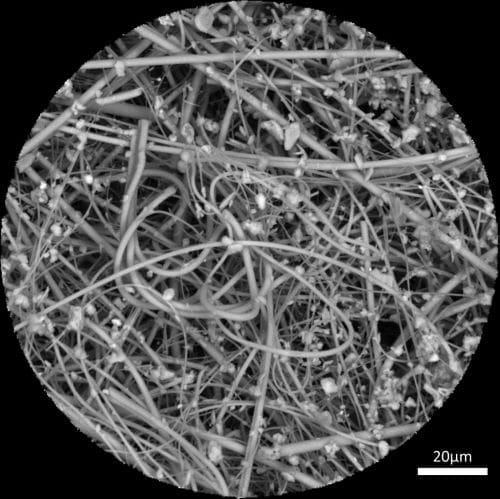
The question extends far beyond any single pollutant. Plastics, per- and polyfluoroalkyl substances (PFAS) and other persistent synthetic compounds are now found across soils, waters, wildlife and remote environments, often long after their original use has ended.
As evidence accumulates, researchers are looking beyond direct toxicity to a broader question: how might the growing presence of persistent synthetic substances affect populations, ecological interactions, ecosystem functions and biodiversity itself?
The concern is not limited to a single substance. It spans a diverse range of human-made materials and chemicals, including plastics, per- and polyfluoroalkyl substances (PFAS), and highly persistent degradation products such as trifluoroacetic acid (TFA).
Although these substances differ in their chemistry and uses, they share a common characteristic: once released into the environment, they can remain for exceptionally long periods.
In recent years, researchers have detected PFAS in drinking water, rainwater, soils, wildlife and remote regions far from major sources of pollution. Plastics and their microscopic fragments have been found from deep-sea sediments to mountain environments, and in human tissues ranging from lungs to placentas.
The growing prevalence of such substances has prompted scientists to view pollution through a broader lens. Increasingly, attention is shifting from individual contaminants toward a larger question: what are the consequences when persistent synthetic substances become a permanent feature of the wider environment?
This concern is reflected in the Planetary Boundaries framework, developed to assess processes that could destabilize Earth’s environmental systems. One of its boundaries concerns “novel entities,” a broad category that includes synthetic chemicals, plastics and other human-made substances introduced into the environment.
These materials are produced and released in enormous quantities, while their diversity and complex interactions make their planetary-scale consequences difficult to understand.
The Stockholm Resilience Centre considers the boundary for novel entities to have been transgressed. Its assessment reflects a widening mismatch between the rapid expansion of synthetic substances and the much slower process of determining their environmental risks.
When pollution stops being local
The consequences of persistence become most visible when substances begin to appear far beyond the places where they were first produced or used.
TFA, an exceptionally persistent degradation product of fluorinated compounds, is now found in environmental waters across Europe and elsewhere. More broadly, the continued transport and redistribution of persistent chemicals and microscopic plastic particles show how pollution can extend across regions and environmental compartments long after release.

The significance of these findings lies not only in their ubiquity. Together, they suggest that some synthetic substances are no longer behaving as localized contaminants. Through persistent circulation and accumulation, they are becoming increasingly embedded across natural environments.
For much of the twentieth century, pollution was often understood as contamination: a substance entering a place where it did not belong. Persistent pollution introduces a different challenge. As substances accumulate and circulate through environmental systems, they increasingly resemble a condition rather than an event. The question is no longer only how to contain a spill, but how ecosystems function in the continued presence of materials that may persist for decades or longer.
What persistent pollution means for living systems
Persistent pollution does not enter an empty world. It enters living systems that are already performing the biological work upon which life depends.
When biodiversity is discussed in public debates, it is often framed as a question of protecting species. Scientific understanding, however, increasingly extends beyond species alone.
Biodiversity is more than the number of species in an ecosystem. It encompasses variation within and among living organisms, while the interactions among those organisms help determine how ecosystems function. Soil organisms decompose organic matter and recycle nutrients. Pollinators support the reproduction of flowering plants and many agricultural crops. Microorganisms influence carbon storage, water quality and soil fertility. Predators help regulate populations. Countless interactions between species sustain processes that make ecosystems productive and resilient.
Many of these processes operate continuously and largely unnoticed. Yet they form part of the biological infrastructure upon which human societies depend.
The World Health Organization describes biodiversity as fundamental to human health, linking it to food security, medicine, clean water and disease regulation. Similar connections appear throughout ecological research, where biodiversity is increasingly understood not only as a measure of nature’s richness but as an important influence on ecosystem stability and function.
The question, however, is not whether ecosystems can respond to change. They always have.
The challenge is that persistent pollution rarely occurs in isolation.
Forests, rivers, agricultural landscapes and oceans are already experiencing multiple pressures, including climate change, habitat loss, overexploitation of natural resources and the spread of invasive species. Pollution adds another layer of stress to ecosystems already responding to multiple forms of environmental change.
Researchers increasingly describe these pressures as interacting rather than independent. A pollutant that appears manageable in isolation may have different consequences when combined with rising temperatures, altered rainfall patterns, habitat fragmentation or declining species diversity.
Understanding how these pressures interact and accumulate has become a major challenge in modern environmental science.
From individual organisms to entire ecosystems
This broader view of pollution is increasingly reflected in biodiversity research.
Much ecotoxicological research has examined how contaminants affect individual organisms, including changes in reproduction, survival, growth and behaviour. Such studies remain essential, but researchers are increasingly asking how these effects translate into changes at the level of populations, ecological communities and ecosystems.

A 2026 review in Nature Reviews Biodiversity found that evidence for the effects of plastic pollution is strongest at the level of individual organisms. Much less is known about consequences at higher levels of biological organization, including populations, ecological communities, ecosystem functioning and biodiversity itself.
The observation reflects a broader imbalance in the literature. Compared with major environmental pressures such as climate change, chemical pollution still occupies a much smaller place in research on the diversity and functioning of living systems.
This gap is driving efforts to understand not only how pollutants affect individual organisms, but how those effects scale across species, ecological interactions and ecosystem processes.
Viewed through this lens, biodiversity becomes more than an environmental indicator.
It is closely connected to the capacity of ecological systems to maintain functions, reorganize and recover in the face of disturbance. That does not guarantee resilience, but the diversity of organisms, traits and ecological interactions can influence how ecosystems respond to environmental change.
The question facing scientists is therefore no longer only whether persistent synthetic substances are harmful to individual organisms. It is whether ecosystems can continue performing the functions upon which both biodiversity and human societies depend while carrying a growing burden of substances that resist natural cycles of breakdown and renewal.
Rethinking how pollution risk is measured
For much of the modern environmental era, chemical risk assessment has largely been organized around identifiable hazards, estimates of exposure and defined biological or health effects. This framework remains essential for evaluating risks to human health and the environment, but researchers have increasingly identified limitations when it is applied to highly persistent substances, complex chemical mixtures and exposures that accumulate over long periods.
The challenge becomes more complex when persistent substances interact with ecological processes, environmental change and other contaminants. Their effects can unfold through accumulation and long-term exposure, including exposure to chemical mixtures involving large numbers of substances, many of which remain incompletely characterized.
As these limitations become clearer, research and policy are beginning to connect areas that were often treated separately. Biodiversity research is paying greater attention to chemical pollution, while health research increasingly examines how environmental degradation and complex chemical exposures affect human well-being. In Europe, policy and regulatory frameworks are also becoming more integrated, linking chemical risk assessment with wider efforts to protect human health, biodiversity and ecosystem condition.
Where human and environmental health meet
This growing recognition of the links between human and environmental health is also reflected in frameworks such as One Health and Planetary Health.
Although they developed from different traditions, both approaches emphasize that human health is inseparable from the condition of the living world and the natural systems that support it. One Health focuses particularly on the interconnections among people, animals, plants and ecosystems, while Planetary Health places those relationships within the broader functioning of Earth’s natural systems.
Together, these approaches challenge the idea that environmental change can be considered separately from human health.
In reality, many of the same ecological processes that support biodiversity also help regulate water quality, soil fertility, food production, climate and the ecological conditions that influence disease.
Biodiversity, then, is not simply something humanity protects. It is part of the natural foundation upon which human well-being depends.
For centuries, human ingenuity was measured by our ability to make things last longer.
Stronger materials, more durable products and increasingly stable chemical compounds helped shape the modern world, enabling technologies and products that became integral to modern life.
Yet the environmental questions emerging in the twenty-first century suggest that durability can carry consequences far beyond the purposes for which these materials were originally designed.
The challenge is not simply that persistent substances exist.
It is that they now persist within living systems shaped by continuous cycles of transformation and renewal.
From fluorinated compounds transported through the atmosphere to microscopic plastic particles dispersed across oceans and soils, some of humanity’s most persistent creations are becoming increasingly embedded in the planet’s air, water, soils and living systems.
How ecosystems will continue to function under this growing burden remains an open scientific question.
What is becoming clearer, however, is that the answer will not be found in contaminant concentrations or effects on individual species alone.
It will also depend on how pollution reshapes ecological interactions, ecosystem functions and the capacity of living systems to withstand and recover from disturbance.
The environmental challenges of the twenty-first century may be shaped not simply by a conflict between humanity and nature, but by our ability to reconcile the permanence of our inventions with the cycles upon which life depends.
Sources:
https://pubs.acs.org/esthag/article/56/16/11172/382091/Outside-the-Safe-Operating-Space-of-a-New
https://www.sciencedirect.com/science/article/abs/pii/S0013935121015334
https://www.sciencedirect.com/science/article/pii/S0048969721060812
https://www.sciencedirect.com/science/article/abs/pii/S2452223623000561
https://www.sciencedirect.com/science/article/abs/pii/S0045653500000667
https://www.sciencedirect.com/science/article/pii/S2589004225026756
https://pubs.acs.org/esthag/article/60/13/9718/5150138/Is-Persistence-a-Hazard
https://www.nature.com/articles/nature11148
https://www.nature.com/articles/nature11118
https://www.nature.com/articles/nature19092
https://www.nature.com/articles/s44358-025-00123-z
https://www.nature.com/articles/s44358-026-00170-0
https://pubmed.ncbi.nlm.nih.gov/36943240/
https://onlinelibrary.wiley.com/doi/full/10.1897/09-140.1
https://www.nature.com/articles/s41586-018-0627-8
https://www.nature.com/articles/s44358-026-00162-0
https://www.nature.com/articles/s44358-026-00159-9
https://pubmed.ncbi.nlm.nih.gov/2694585/
https://www.who.int/publications/i/item/9789240035720
https://pubmed.ncbi.nlm.nih.gov/22974746/
https://www.sciencedirect.com/science/article/pii/B978012415813900012X
https://pubs.acs.org/doi/10.1021/acs.est.6c00770
https://pmc.ncbi.nlm.nih.gov/articles/PMC6979318/
https://pubs.acs.org/esthag/article/56/3/1510/489330/Outside-the-Safe-Operating-Space-of-the-Planetary
https://onlinelibrary.wiley.com/doi/full/10.1111/gcb.16689
https://efsa.onlinelibrary.wiley.com/doi/full/10.2903/j.efsa.2017.4690
https://www.who.int/teams/one-health-initiative/quadripartite-secretariat-for-one-health/one-health-joint-plan-of-action
https://www.sciencedirect.com/science/article/pii/S108112062400526X
https://pmc.ncbi.nlm.nih.gov/articles/PMC7619333/
https://www.sciencedirect.com/science/article/pii/S0048969724018345
https://www.oecd.org/en/publications/global-plastics-outlook_de747aef-en.html
https://www.sciencedirect.com/science/article/pii/S0301479724031499
https://www.sciencedirect.com/science/article/abs/pii/S0012825224003015
https://www.stockholmresilience.org/research/planetary-boundaries/the-nine-planetary-boundaries/novel-entities.html
https://www.who.int/europe/news-room/fact-sheets/item/nature–biodiversity-and-health
https://pubs.acs.org/doi/10.1021/acs.est.4c04453
https://www.sciencedirect.com/science/article/abs/pii/S0301479724024782
https://pubs.acs.org/esthag/article-split/60/28/19761/5175987/Planetary-Boundary-for-Novel-Entities-Time-for-a
https://pmc.ncbi.nlm.nih.gov/articles/PMC12028879/
Featured image credit: Muser Press (AI generated)