Summary:
Urban environments present unique challenges for wildlife, yet some species appear to thrive under these conditions.
A new study published in Ecology Letters examines how three aquatic species — a bivalve and two crustaceans — adapt to stressors in urbanized waters compared to more natural habitats. Led by Dr. Elizabeta Briski from GEOMAR Helmholtz Centre for Ocean Research Kiel, researchers compared populations from the heavily human-influenced Kiel Fjord with those from the less disturbed Schlei. By exposing them to stressors such as temperature shifts, salinity changes, and acidification in a controlled lab setting, the team found that urban populations exhibited greater resilience.
These findings suggest that species in human-altered environments may already be evolving to withstand environmental change. While this adaptability could support conservation efforts, it may also increase the risk of these species spreading to new areas as potential invasive species. Future research will explore the broader implications of urban adaptation, including the role of pollution and other stressors.

Urban environments promote adaptation to multiple stressors
Urban habitats are very different from natural habitats and pose new challenges for animals and plants. Until now, little was known about how populations of the same species evolve in habitats with and without human influence.
An international team of researchers led by Dr Elizabeta Briski, a marine biologist at the GEOMAR Helmholtz Centre for Ocean Research in Kiel, Germany, has now investigated how conditions in urban areas affect the populations of three aquatic species (one bivalve and two crustaceans). Her study shows that these populations adapt to a disturbed environment and thus become more resilient to environmental change.
The results are published in the journal Ecology Letters.
Differences between urban and natural habitats
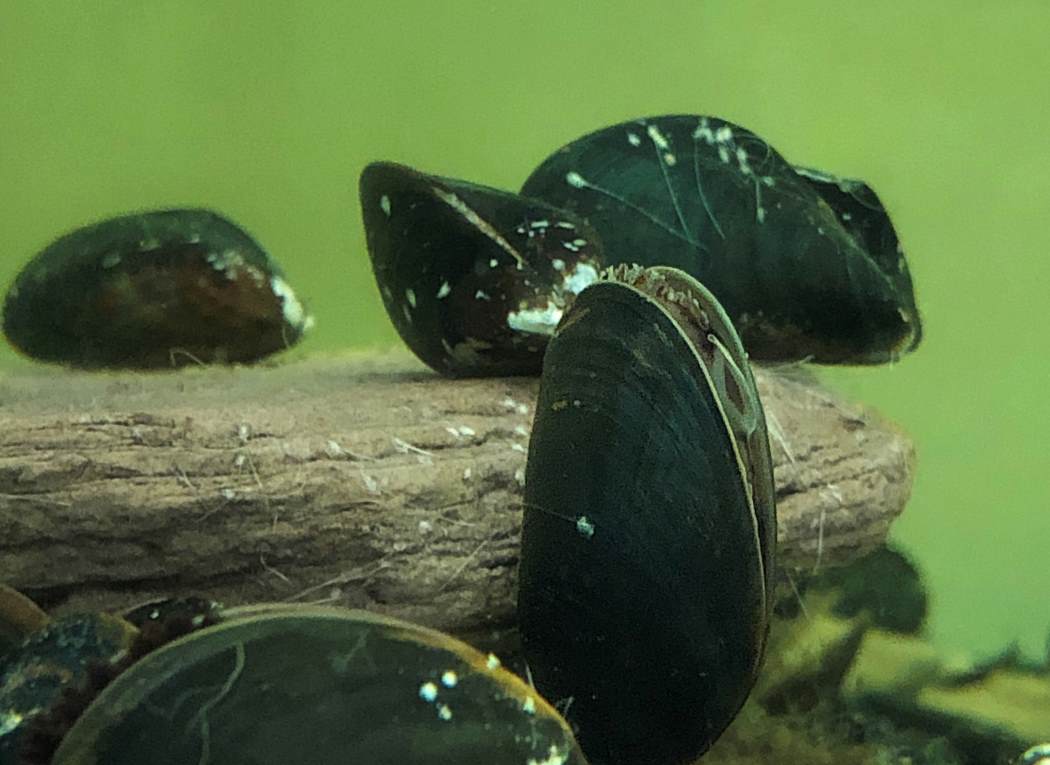
For their study, the researchers compared populations of blue mussel (Mytilus sp.) and amphipods (Gammarus locusta and Gammarus salinus) from the Kiel Fjord, which is heavily influenced by humans, with those from the Schlei, which is less exposed to environmental changes. “Just some of the differences between these locations are the concentrations of heavy metals in sediment, as well as temperature” explains Briski. “Cities are heat islands where animals already have to endure higher temperatures than in natural habitats that are largely unaffected by humans.”
Stress test in the lab
To test their adaptability, the researchers exposed animals from both water bodies to a range of stressors under laboratory conditions. The stressors reflected current and predicted environmental conditions in the Baltic Sea, such as rising temperatures, salinity changes and increased carbon dioxide in the water, leading to acidification. The team documented mortality of the animals over a period of 30 days.
Urban populations are more resilient
The results show that populations from urbanised habitats tend to be more robust to these environmental stressors, and are already adapting to changing conditions when compared to their counterparts from protected habitats.
“These populations could serve as potential ‘rescue populations’ for endangered populations” says Briski. At the same time, their greater tolerance to future environmental changes could make it easier for them to conquer new habitats, warns Briski: “This makes them potential invasive species spread by human trade and transport between urban centres.”
Important findings for conservation and climate adaptation
The results of the study support the hypothesis that urban habitats can provide important clues about how animals will adapt to future environmental changes. “Our results show that populations of species differ in their susceptibility to stressors associated with urbanisation,” says Briski.
This has important conservation implications: “Urban populations could support natural habitat’s populations because they are more resilient to environmental change.” However, it remains to be seen whether these adaptations can keep pace with human-induced environmental changes.
Future research should investigate how other stressors, such as heavy metals or light pollution, affect adaptation and whether these adaptations offer advantages in new habitats.
Journal Reference:
Briski, E., Langrehr, L., Kotronaki, S.G., Sidow, A., Martinez Reyes, C.G., Geropoulos, A., Steffen, G., Theurich, N., Dickey, J.W.E., Hütt, J.C., Haubrock, P.J., Soto, I., Kouba, A. and Cuthbert, R.N., ‘Urban Environments Promote Adaptation to Multiple Stressors’, Ecology Letters 28: e70074 (2025). DOI: 10.1111/ele.70074
Article Source:
Press Release/Material by Helmholtz Centre for Ocean Research Kiel (GEOMAR)
Featured image credit: Gregor Steffen | GEOMAR | CC-BY 4.0