
Explore the latest insights from top science journals in the Muser Press roundup (December 10, 2025), featuring impactful research on climate change challenges.
In brief:
Climate extremes triggered rare coral disease and mass mortality on the Great Barrier Reef
University of Sydney marine biologists have identified a devastating combination of coral bleaching and a rare necrotic wasting disease that wiped out large, long-lived corals on the Great Barrier Reef during the record 2024 marine heatwave.
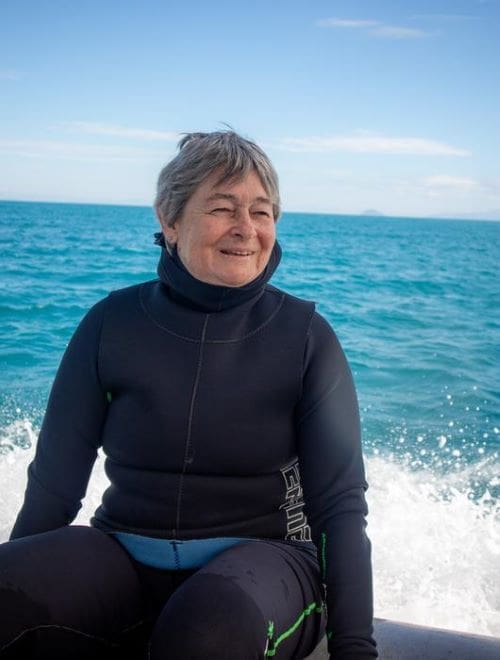
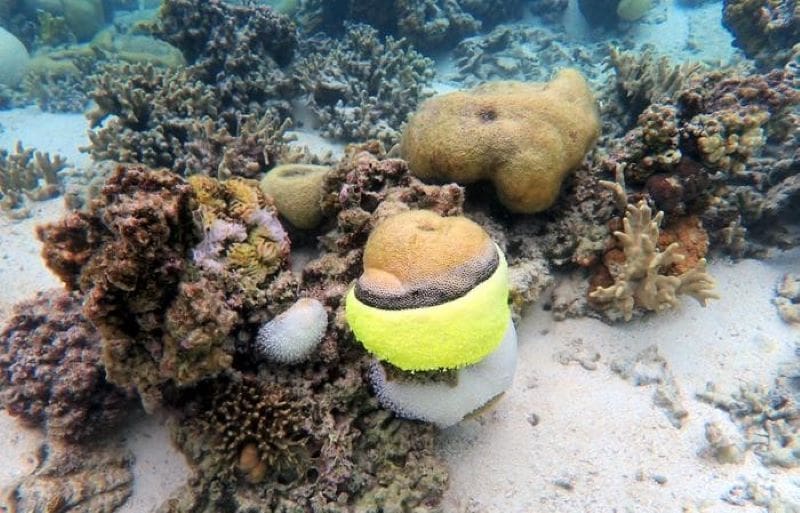
The study, led by Professor Maria Byrne and Sydney Horizon Fellow Dr Shawna Foo, found that bleaching triggered by extreme ocean temperatures was followed by an unprecedented outbreak of black band disease that killed massive Goniopora corals, also known as flowerpot or daisy coral, at One Tree Reef on the southern Great Barrier Reef.
“This research shows that the compounding impact of disease – which appeared after the onset of bleaching – is what killed the Goniopora. These are very long-lived corals that would normally survive bleaching,” said Professor Byrne, a professor of marine biology in the School of Life and Environmental Sciences.
Their study is published in Proceedings of the Royal Society B.
Black band disease is a bacterial necrotic infection that invades living coral, forming a black band that crosses the infected coral, usually killing the colony. Common in Caribbean reefs, it is rare in Australian waters.
The 2024 El Niño brought the highest sea temperatures on record to the Great Barrier Reef, with marine heatwave conditions persisting for months. During this period, 75 percent of Goniopora colonies at One Tree Reef bleached. Initially only a few (4 percent) showed signs of black band disease. By April, however, the disease had spread aggressively, invading more than half the bleached colonies.
Tracking 112 tagged Goniopora colonies over a year, the team found that three-quarters had died by October 2024, while only one quarter showed partial recovery. Population surveys of more than 700 colonies revealed the same pattern: widespread bleaching, rapid disease progression and high mortality.
Black band disease has been known for decades in the Caribbean, often linked to pollution or nutrient runoff, but it is extremely rare on the Great Barrier Reef. Its sudden appearance in One Tree Reef’s pristine waters marks the first recorded epizootic (an animal epidemic) event of this kind on the Great Barrier Reef and demonstrates how heat stress can turn even resilient coral species into disease victims.
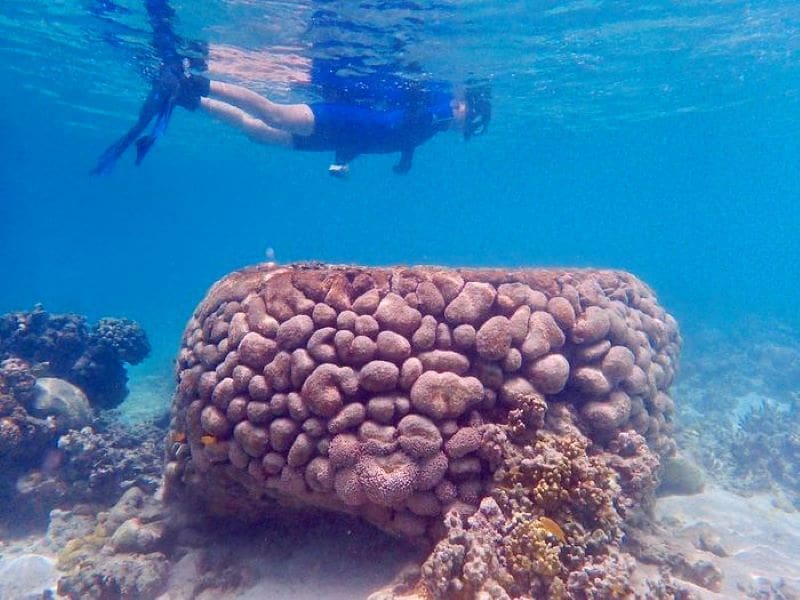
“Normally these massive corals withstand environmental stress, but the combination of record heat and infection was catastrophic,” said Dr Shawna Foo, an ARC DECRA Fellow in the School of Life and Environmental Sciences. “It’s a stark example of how multiple stressors can act together to undermine reef resilience.”
The findings highlight the importance of long-term in-water monitoring made possible by the University’s One Tree Island Research Station, which provides vital infrastructure for studying coral ecosystems under natural conditions.
At the global level, the research sends an urgent warning.
“The current trajectory of climate change is progressing too quickly for corals to adjust,” the authors write. “Coral reefs are in danger, with recurrent anomalous heatwaves and mass coral bleaching being the greatest threat to their survival.”
Professor Byrne said the loss of these large, structure-forming corals will have lasting effects on reef biodiversity, coastal protection and food security.
“Coral reefs support more than a billion people worldwide. What we’re witnessing is a collapse in the natural resilience of these ecosystems. Ambitious global action to reduce emissions is now the only path to their survival.”
Journal Reference:
Maria Byrne, Matthew Clements, Michael Kingsford, Shawna Andrea Foo, Neel Ramjus, Alexander Waller, ‘Marine heatwave-driven mortality of bleached colonies of the massive coral Goniopora is exacerbated by a black band disease epizootic’, Proceedings of the Royal Society B: Biological Sciences 292, 2060: 20251912 (2025). DOI: 10.1098/rspb.2025.1912
Article Source:
Press Release/Material by University of Sydney
Ocean current and seabed shape influence warm water circulation under ice shelves
Scientists at the University of East Anglia (UEA) used an autonomous underwater vehicle to survey beneath the Dotson Ice Shelf in the Amundsen Sea, an area of rapid glacial ice loss largely due to increasing ocean heat around and below ice shelves.
The circulation of warm water and the heat transport within ice shelf cavities – significant areas beneath ice shelves – remains mostly unknown. To address this the team collected data from over 100 kilometres of dive tracks the underwater robot made along the seabed in the Dotson cavity.
The findings are published in the journal Ocean Sciences.
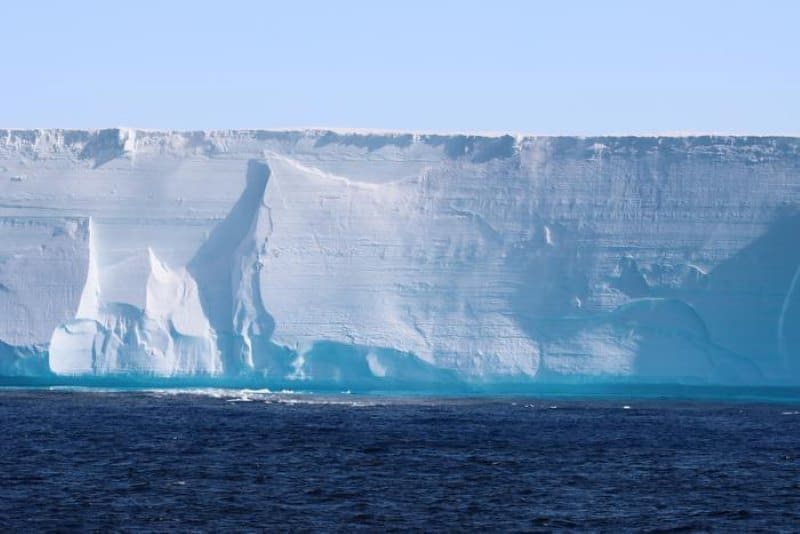
Lead author Dr Maren Richter, from UEA’s Centre for Ocean and Atmospheric Sciences, said: “Upward transport of deep warm water to the shallower ice-ocean boundary in ice shelf cavities is what drives melting at the underside of the ice shelf. This melting makes the ice shelf thinner, and therefore less strong.
“We found that while there is mixing of warm water with other, cooler, water, under the Dotson Ice Shelf most of the warm water is not mixed upward. Instead, it flows horizontally to the grounding line, the point where the glacier loses contact with the seabed and starts to float.
“This means that the water stays warm all the way to the grounding line, where it can melt the glacier directly. This can cause the glacier to retreat, speed up and lose more ice into the ocean. Together, the retreat, increased speed, and increased melt contribute to sea level rise globally.”
During the mission, the first of its kind under the Dotson Ice Shelf, the researchers found warm, salty water below colder, fresher water. It is already known that warm water is transported upward by mixing, however this study shows that the mixing and upward transport of warm water are strongest in the inflow areas to the east of the ice shelf, where the currents are faster and the seabed is steep, with the gradient of the bedrock being particularly significant.
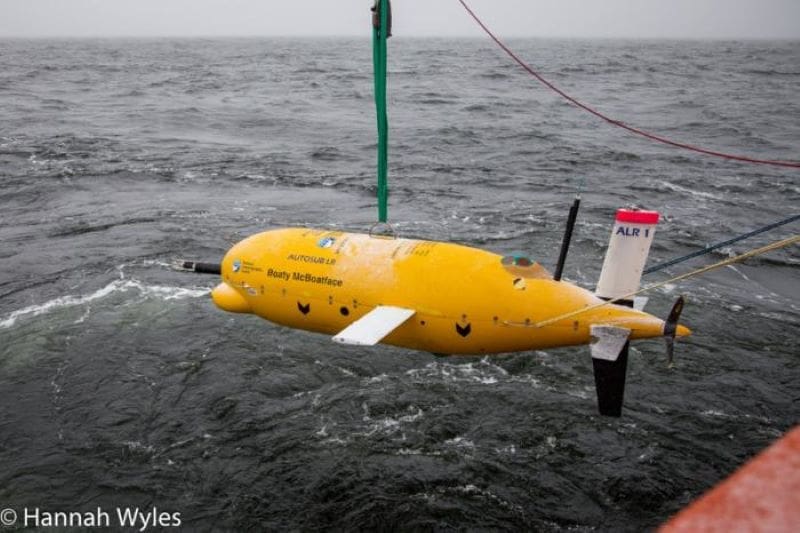
Current speeds recorded in this area by the Autosub Long Range (ALR) autonomous underwater vehicle – named Boaty McBoatface and operated by the National Oceanography Centre – were around five centimetres per second up to 10 centimetres per second. The gradient was about 45 degrees in the steepest areas.
Dr Richter added: “We were expecting the influence of current speed on the mixing to be much higher than what we found. Instead, the shape of the seabed seems to be really important.
“We also found water in the deepest part of the cavity that was surprisingly warm, and we are now working to explain how and when it got there.”
The data was collected over four missions in 2022 when Boaty, equipped with sensors to measure properties of the water including temperature, current, turbulence (mixing) and oxygen, travelled along the bottom of the ice shelf cavity, staying about 100 metres above the seabed. Boaty was in the cavity for approximately 74 hours.
Missions to send a robot into an ice shelf cavity and then get it back at the end are very difficult, and ones with an instrument that can measure mixing are especially rare.
“This mission was the first of its kind under the Dotson Ice Shelf,” said Dr Richter. “We gained very valuable baseline measurements which can now be compared to assumptions about mixing in regional and global models of ice shelf-ocean interactions, and to measurements under other ice shelf cavities, helping us understand how these cavities are similar or different from each other.”
Warm deep water that is mixed upward not only increases the temperature in the upper ocean, it can also transport nutrients and trace-metals upward, which is very important for local algae blooms and the creatures that depend on them for food.
While this study did not measure nutrient transports through mixing, the data can be used by other researchers who want to calculate the effects of mixing in the cavity.
The work was carried out as part of a project for the International Thwaites Glacier Collaboration, a major five-year research programme aiming to understand what is causing ice loss and better predict how this could contribute to sea level rise. It was funded by the UK’s Natural Environment Research Council and the US National Science Foundation.
Journal Reference:
Richter, M. E., Heywood, K. J., Hall, R. A., and Davis, P. E. D., ‘Observations of turbulent mixing in the Dotson Ice Shelf cavity’, Ocean Sciences 21, 3341–3359 (2025). DOI: 10.5194/os-21-3341-2025
Article Source:
Press Release/Material by University of East Anglia (UEA)
Homes that can withstand extremes: New study reveals pathways to housing resilience
New research spanning political science and civil engineering shows that the answer could lie at the intersection of smarter regulatory systems and stronger structures. While neither approach is sufficient on its own, together they offer a promising path toward safer homes.

University of Notre Dame political scientist Susan Ostermann and civil engineering professors María J. Echeverría from California State University, Sacramento and Abbie Liel from the University of Colorado Boulder have identified the building code features that have the biggest impact on hazard resilience and translated those features into tangible, practical building solutions.
The findings from their National Science Foundation-funded study were published in the International Journal of Disaster Risk Reduction.
A dual approach to resilience
Ostermann and Liel say that housing resilience is both a governance issue and a technical problem. Building codes, as written, already contain nearly everything one needs to build safe homes – but in many places, implementation remains a barrier.
“Regulations support the goals of safe, resilient housing, but they can also get in the way,” said Ostermann, associate professor of global affairs and political science at Notre Dame’s Keough School of Global Affairs. “We need to understand how culture and local building practices interact with regulatory processes.”
A locally informed approach to regulation was especially important given the site of the study: Anchorage, Alaska. Geographically isolated from the continental U.S., its independent-minded population often distrusts governmental rules. Even after more than 750 homes were destroyed or damaged by a magnitude 7.1 earthquake in 2018, many Alaskans have retained their libertarian-leaning views. In other words, simply strengthening building codes does not guarantee safer construction if the codes are not followed in the first place.
“People everywhere share a desire for safe housing, but communities vary in the degree to which they regulate and enforce building codes,” Ostermann said.
A pragmatic approach to regulation
To gain local expertise on the key features of hazard-resilient housing, the researchers conducted interviews with nearly 40 experts including structural and geotechnical engineers, builders, regulators, inspectors and others. Underlying this approach is regulatory pragmatism, a concept Ostermann developed to help governments regulate more effectively in places where traditional, top-down models fail.
“It suggests that we need to understand the context in which we regulate, and that we need to design regulation for that context – which means sometimes doing things that are a little bit weird,” Ostermann said.
The sheer complexity of building code poses a challenge in and of itself.
“If you were to print it out, it’s multiple volumes,” Ostermann said. “It’s too big to be comprehended by almost anybody, whether it’s the government using it or a contractor trying to meet the code.”
Because few people can realistically utilize the entire code, Ostermann and Liel argue that local officials and other stakeholders must prioritize a smaller set of features that matter most for hazard safety in their particular environment.
Engineering insights: Why homes fail and how to fix it
Echeverría and Liel’s computational structural engineering analysis showed that many homes in Alaska do not perform well in hazardous conditions because key structural elements are missing due to lack of compliance.
In many two-story homes built over large, open garages – a common design in Alaska – the mass of the second floor sits on a first floor with limited lateral support. “You’re basically missing one side of that box,” Liel said. “That overstrains the other sides and creates a twisting torsion problem, so these homes do not perform as well during an earthquake.”
Echeverría and Liel identified a list of critical structural features that should be prioritized to maximize compliance and hazard resilience:
- Shear walls – walls that are designed to withstand lateral forces such as wind;
- Proper framing around garage openings;
- Hold-downs – steel connectors that anchor a wall to the foundation and keep it anchored amid shaking.
Liel emphasized that these solutions are neither exotic nor expensive, but homeowners and builders often do not recognize their significance. Echeverría and Liel’s findings provided the very list of “critical features” needed to inform Ostermann’s pragmatic regulation.
Ostermann and Liel are studying housing not only in Alaska, but also in Puerto Rico, which is still rebuilding eight years after Hurricane Maria, and Lahaina, Maui, which suffered widespread damage during a 2023 wildfire.
“When communities, engineers, builders and policymakers work together, resilience stops being an abstract ideal and becomes a place people can safely make their home in,” Ostermann said. “If we keep listening, learning and adapting, we can build homes that not only endure the next disaster, but also give families the security and stability they need to plan for the future.”
Journal Reference:
Maria J. Echeverria, Abbie B. Liel, Susan L. Ostermann, ‘Essential hazard-resistant features for seismic performance of wood-frame housing where building regulation is uneven’, International Journal of Disaster Risk Reduction 131, 105878 (2025). DOI: 10.1016/j.ijdrr.2025.105878
Article Source:
Press Release/Material by Renée LaReau | University of Notre Dame (ND)
Connection and protection boost health in coral reefs
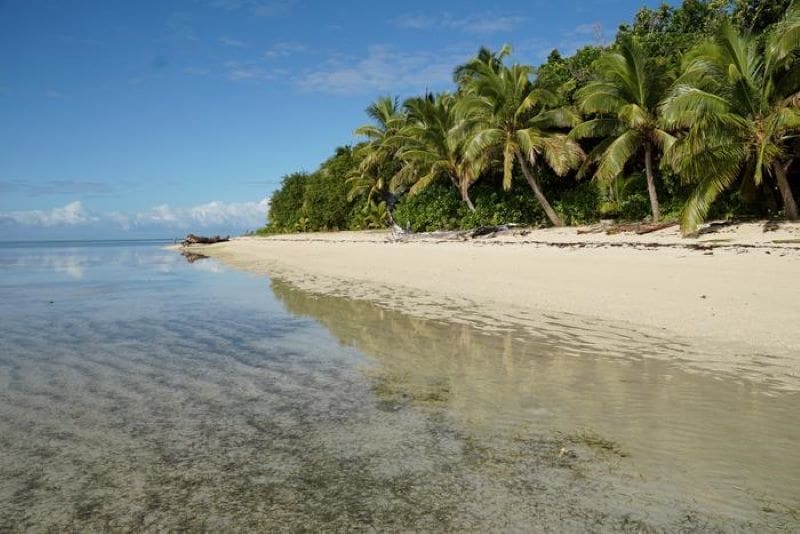
Coral reefs may seem like paradise, but they are being degraded by a range of global and local factors, including climate change, poor water quality, and overfishing. New research published in Ecological Applications reveals that connections between reefs help stabilise reef health, reducing the risk of collapse, and that a dual approach – improving conditions on both land and sea – may be the best way to protect these crucial ecosystems.
The study was a collaboration between the University of Oxford, the University of Toronto, the National Research Council of Italy, and the Wildlife Conservation Society (WCS).

By developing a mathematical model of a network of coral reefs in Fiji, researchers simulated future reef conditions when managed in three different ways: reducing fishing pressure (increasing herbivore grazing), reducing environmental run-off (decreasing coral mortality), and the two interventions combined. Addressing these two local pressures is a focus as many reefs in Fiji are climate refugia with reduced impacts from global warming and coral bleaching, and show natural recovery to acute events like cyclones.
When considering local pressures, reducing the combination of fishing and pollution provided the best outcomes for reefs, showing the value of coordinated actions on land and in the ocean. Importantly, this result was robust to uncertainty in important reef conditions, indicating that it may be relevant for real-world decision-making in reef systems in Fiji and beyond.
They also discovered that fishery closures that improve grazing in less than half of the reef network can lead to increases in coral cover across the entire system due to larval dispersal connections. This result highlights the usefulness of planning conservation around networks of locations connected by coral larval dispersal, rather than isolated reefs – an approach that remains uncommon but proves powerful in revealing how connections between reefs influence long-term outcomes.
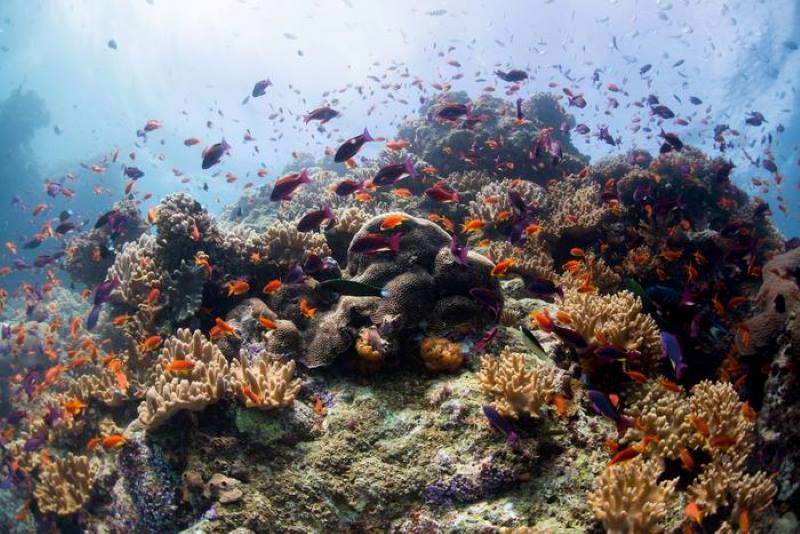
Lead researcher Dr Ariel Greiner (Department of Biology, University of Oxford) explained: “For too long, coral reefs have been managed in isolation. Our research shows that when we account for connections between reefs, we find that they are far more stable than previously thought. Protecting a few key reefs can help sustain high coral cover across the entire network – the key is identifying which ones to protect. We also illustrate that strategies that address both overfishing and land-based pollution together deliver the strongest and most lasting results.”
The study also revealed that the dispersal of juvenile corals likely stabilises long-term reef dynamics, lowering the risk of a coral-dominated reef tipping into a non-coral-dominated state – an indicator of poor reef health. Dr Greiner said: “Our study shows that when we include realistic dispersal connectivity between many reefs, the duality of coral- or non-coral-dominated reefs that we see in models of single or pairs of reefs disappears when we consider entire networks of reefs. This is a novel, unexpected, and exciting result with impacts for coral reef management, and for our understanding of coral reef dynamics globally.”
The study used a value of information (VOI) analysis in combination with a mathematical model, which is novel for marine conservation. This combination of methods can inform more effective conservation planning by allowing modellers and decision-makers to assess the robustness and impact of management actions across large spatial scales and long timeframes, improving our ability to anticipate risks and design resilient strategies for the future.
“This study shows how modelling can help forecast the long-term consequences of today’s conservation decisions and pinpoint the actions that build lasting resilience for reefs facing multiple pressures,” said Dr Emily Darling (Director of Coral Reefs at WCS), a co-author of the study. “What’s powerful about these findings is their practicality: when we focus on climate-resilient coral reefs, coordinated efforts to reduce fishing pressure and improve water quality can generate outsized benefits across entire reef networks. This gives decision-makers a realistic path to protect ecosystems while supporting the communities who depend on them.”
The researchers next plan to look similarly at other coral reef systems around the world and extend the models to more explicitly include human dynamics – for example, exploring the impact of tourism-funded conservation initiatives – and to better understand under what conditions the dispersal of young coral and macroalgae will stabilise local reef dynamics.
Journal Reference:
Greiner, Ariel, Marco Andrello, Martin Krkošek, Marie-Josée Fortin, Yashika Nand, Stacy D. Jupiter, Sangeeta Mangubhai, Amelia Wenger, and Emily S. Darling, ‘Dispersal Can Spread Management Benefits: Insights from a Modeled Fijian Coral Reef Network’, Ecological Applications 35, (8): e70156 (2025). DOI: 10.1002/eap.70156
Article Source:
Press Release/Material by University of Oxford
Featured image credit: Gerd Altmann | Pixabay