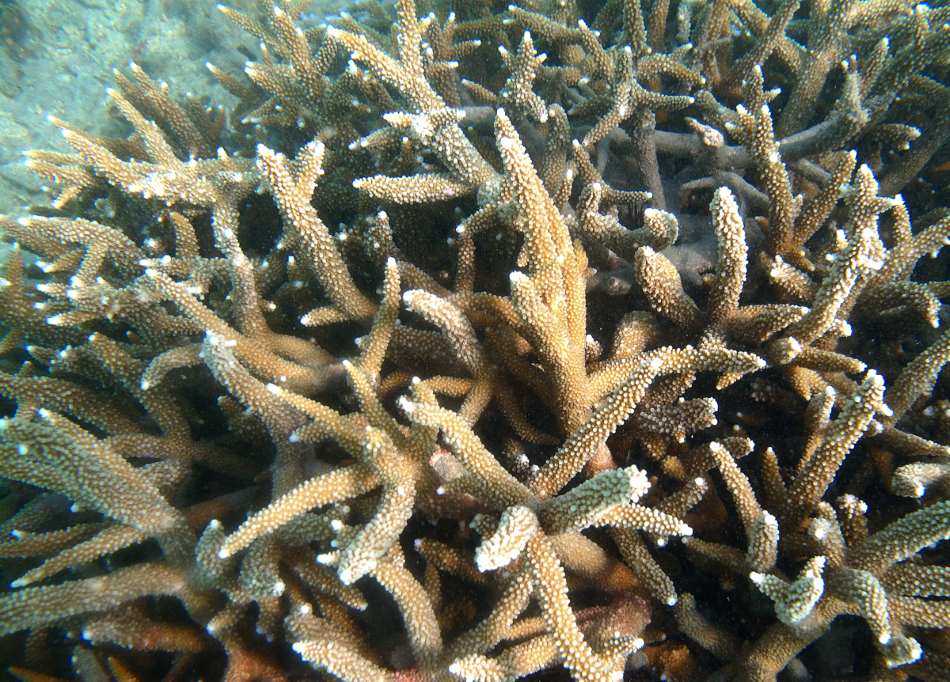

Explore the latest insights from top science journals in the Muser Press roundup (March 31, 2026), featuring impactful research on climate change challenges.
In brief:
— Press Release —
Climate change could make unhealthy air a routine reality by 2100
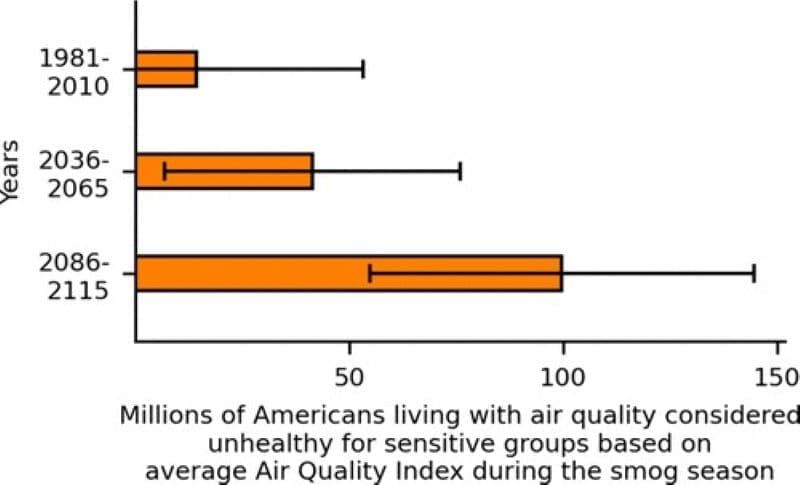
New modelling shows almost one in three Americans will routinely breathe air considered unhealthy for sensitive people by the year 2100 due to climate change, a sevenfold increase compared to the turn of the century.
The international study, led by the University of Waterloo, found that about 100 million people in the United States will live in areas where average air quality during smog season is poor enough to trigger alerts advising vulnerable people to stay indoors.
That is up from an estimated 14 million people in 2000, with most of the increase coming in California and the eastern United States. Smog season runs from the beginning of May to the end of September.
“Climate change could cause days with poor air quality to shift from rare to commonplace,” said Dr. Rebecca Saari, a professor of civil and environmental engineering and the Canada Research Chair in Global Change, Atmosphere and Health at Waterloo.
“People who are especially sensitive to air pollution, including the elderly, children with asthma and those with health conditions, could face a daily coin flip, with nearly even odds of an alert every day asking them to change their behaviour to reduce exposure.”
The study built on previous research that estimated the number of air quality alerts in the United States will quadruple, and that staying indoors to avoid the health risks posed by worsening air pollution due to climate change would require an additional 142 days per year by the end of the century.
The new study broadens the picture by including the impact of both ozone and particulate matter pollution, which together cause almost all air quality alerts and are the primary environmental contributors to sickness and premature death.
The research team also examined the economic costs of intensifying air pollution and the potential mitigating impacts of policies to limit it over the next 75 years.
Saari said a significant finding is that seniors benefit much, much more than other vulnerable people from steps to limit their exposure to poor air, such as staying indoors, wearing masks, and improved building filtration.
“We were surprised by how widespread and common it could be for sensitive groups to experience air that is considered unhealthy on average,” said Saari. “We hope our work helps inform more targeted guidance and reinforces the need for pollution reductions and long-term adaptations such as access to clean indoor spaces.”
Collaborators included researchers at Harvard University, North Carolina State University and the University of California, Davis.
Journal Reference:
Matt S. Sparks, James D. East, Fernando Garcia-Menendez, Erwan Monier, and Rebecca K. Saari, ‘Air Quality Alerts, Health Impacts, and Adaptation Implications Under Varying Climate Policy’, Environmental Science & Technology (2026). DOI: 10.1021/acs.est.5c12522
Article Source:
Press Release/Material by University of Waterloo
— Press Release —
Cow manure digesters really cut methane — unless they leak
“I think manure emissions on dairies are underestimated. These digesters seem to be a solution that captures a lot of methane,” said Alyssa Valdez, a University of California, Riverside climate scientist and lead study author. “But I wanted to make sure they were working properly.”
The findings of her study, published in Environmental Research Letters, draw on eight years of satellite and airborne observations of 98 dairies across California. By tracking emissions before, during, and after digester installation, Valdez and her research team were able to see how these systems perform over time and at scale.
Digesters are widely seen as a key climate solution. By sealing manure ponds and capturing the gas they produce, these systems convert methane into usable fuel instead of allowing it to escape into the atmosphere where it has a tremendous effect on the climate.
Methane is shorter lived than carbon dioxide, but it is 80 times more powerful at trapping heat in the atmosphere, making even small releases significant.
A previous study led by UCR climate scientist Francesca Hopkins examined emissions at a single dairy using ground-based measurements. Hopkins found that a well-managed digester can cut methane emissions by as much as 80%. This new research builds on that work by showing how digesters perform across dozens of farms, including what happens when things go wrong.
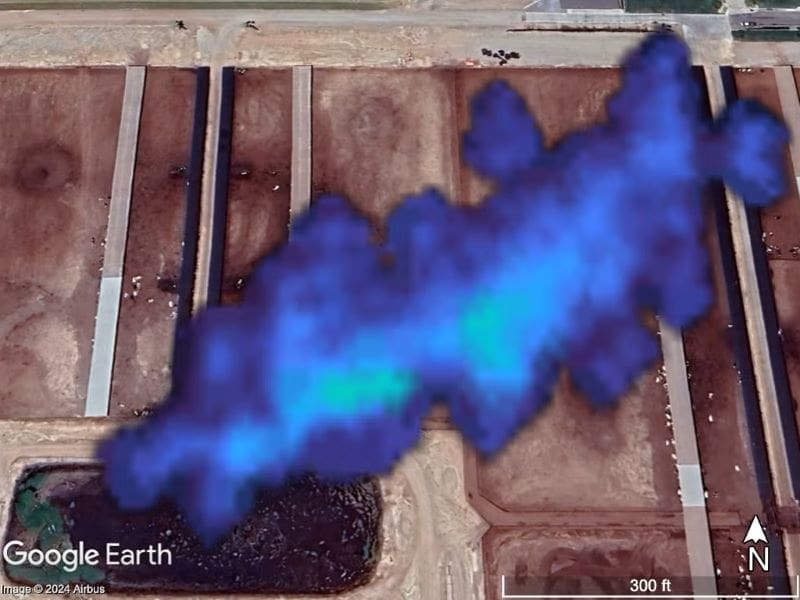
Across the dairies studied, the number of strong methane plumes declined after digesters were installed, suggesting the systems are effective overall. However, the researchers also detected occasional leaks that were far more intense than emissions from traditional manure storage.
“For the most part, the digesters are working well,” Valdez said. “But the few leaks that happen, they make a huge impact.”
In some cases, the team observed methane escaping at rates around 1,000 kilograms per hour. By comparison, typical emissions from open manure lagoons ranged from 20 to 100 kilograms per hour.
The contrast highlights a central challenge: digesters concentrate methane in one place, making it easier to capture, but they also increase the risk of powerful releases if something goes wrong.
Those large releases are not limited to system failures. The study also captured spikes in emissions during digester construction and installation, a phase that is rarely measured but can produce substantial short-term increases.
To capture these patterns, the researchers relied on satellite and aircraft data. Satellite images allowed them to track changes across dozens of dairies over long periods, which is not possible with traditional ground-based monitoring. Aircraft measurements were then used to identify concentrated methane plumes over specific infrastructure locations, making the approach especially useful for spotting leaks.
“A farmer might not know their digester is leaking,” Valdez said. “This gives us a way to detect issues early and prevent them from becoming long-term problems.”
However, this method does not capture all emissions. It cannot measure more diffuse methane releases from sources such as lagoons or fields. For that reason, the researchers say satellite and airborne observations are most effective when combined with on-the-ground measurements, which provide a fuller picture.
This need for comprehensive monitoring comes as California continues to invest in digesters as part of its strategy to reduce emissions of heat-trapping gases. Hundreds of these systems are already operating or in development across the state.
In some cases, methane releases are not accidental. Operators may vent gas when it cannot be flared due to air quality regulations or when systems require maintenance. These process-related emissions add another layer of complexity to managing digester performance.
Even so, the study shows that most systems are working well and that large leaks are relatively uncommon. But for Valdez, who spent years living in California’s Central Valley, and whose family lives there, the work is about ensuring that climate solutions deliver real benefits in a region critical to the nation’s food system.
“This region is the backbone of our food supply, but people there also carry a lot of fear about air quality,” she said. “And they have good reasons for that.”
More broadly, the study highlights the need to pay closer attention to agricultural waste.
“We need to start caring about poop,” Valdez said. “And we need to keep verifying that these solutions are actually working. If we monitor them carefully, we can make sure they deliver on their promise.”
Journal Reference:
Alyssa Valdez, Riley Duren, Daniel Cusworth, Nidia Rojas Robles, Diana Rodriguez Amezquita and Francesca M Hopkins, ‘Evaluating the impact of anaerobic digesters on point source methane emissions from California dairies from remote sensing’, Environmental Research Letters 21, (6): 064018 (2026). DOI: 10.1088/1748-9326/ae4fe4
Article Source:
Press Release/Material by Jules Bernstein | University of California, Riverside (UC Riverside)
— Press Release —
How plants stop growing to survive stress
The rapid response system is based on a process inside plant cells that produces compounds needed for growth, development, and survival. If even one of the key enzymes in this process fails, the plant cannot live.
Under stress conditions such as intense light, this biological pathway behaves in an unexpected manner. Rather than being governed by changes in gene expression, a standard mechanism in biology, it is modulated instantly through direct alterations in enzyme activity.
In most living things, cells adjust their RNA levels to alter protein production, which then changes the balance of other important molecules. But this process takes time that plants may not have when faced with sudden light or heat stress. In plants, the response is much faster. Stress directly alters the activity of enzymes already present in the cell, allowing leaves to respond immediately without waiting for new proteins to be made.
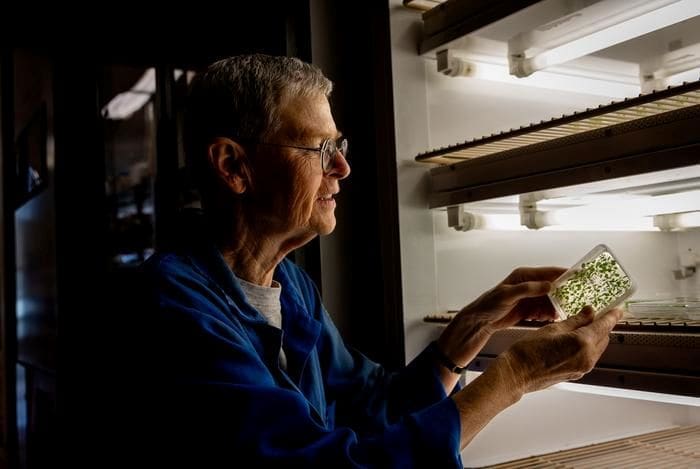
“This kind of response has to be immediate,” said Katie Dehesh, UCR distinguished professor of molecular biochemistry. “Changing gene expression takes time, but modifying enzyme activity allows the plant to react right away and survive.”
Reactive oxygen molecules interfere with the enzymes, reducing their activity and slowing the pathway. At the same time, new compounds build up, blocking earlier steps in the process and preventing some enzymes from working efficiently.
The immediate effect is protective. By limiting the pathway’s output, the plant reduces production of growth-related compounds, effectively pausing development while it copes with stress.
Over time, a second phase begins as the plant adjusts its internal machinery to prolonged stress. These longer-term changes help the plant adapt, but often at a cost, redirecting resources away from growth and resulting in smaller or slower development.
There have been many efforts to engineer plants to increase crop yields and drought tolerance as well as produce valuable molecules like carotenoids, which protect against damage. However, these engineering efforts often fail because they did not account for the two-stage response identified by the Dehesh laboratory and described in the Proceedings of the National Academy of Sciences.
The breakthrough was the result of painstaking work led by Mien van de Ven, a former lab manager and research supervisor who continued contributing to the project even after retiring. She systematically measured intermediate compounds at each step of the pathway, even though they are present in extremely small amounts.
“There were both conceptual and experimental challenges,” Dehesh said. “The metabolites are at very low levels, and even identifying them required careful, step-by-step work.”
The team’s progress began with an unexpected clue. A mutation in one enzyme caused plants to grow smaller without dying. Following this lead, the researchers analyzed each step of the pathway and discovered that one downstream compound accumulated at unusually high levels. They eventually determined why. The compound binds to an upstream enzyme, blocking it and slowing the entire pathway.
Proving this interaction was technically difficult. The team had to isolate delicate enzymes and recreate the right conditions for them to function outside the plant. Even then, the work was challenging. Proteins can become unstable outside their natural environment, and excess materials can interfere with measurements.
“It took a lot of time to get all the components working together under the right conditions,” van de Ven said.
The work culminated in a clearer picture of how plants balance survival and growth under stress. Because similar pathways exist in bacteria, the findings may reflect a broader strategy used by living organisms to respond to environmental change. The research also has practical applications. Enhancing this natural pathway could help scientists develop crops that are more resilient to drought and high light as well as temperature extremes and salinity.
Equally notable is the path to the discovery. Van de Ven continued working on the project for two years after retiring, returning to the lab to complete key experiments.
“She just kept going,” Dehesh said. “It shows how much impact one person can have on science through dedication.”
For van de Ven, now enjoying baking and line dancing in retirement, the decision was simple: finish what she started.
“I didn’t know it would take as long as it did,” van de Ven said. “But it was worth continuing to see it through.”
Journal Reference:
W. van de Ven, M. Hur, M. Fernanda Gómez-Méndez, J. Guo, H. Ke, R. Awal Mahmood, S. Kim, T.D. Sharkey, & K. Dehesh, ‘Metabolite control of enzyme activity links stress to biosynthetic regulation’, Proceedings of the National Academy of Sciences U.S.A. 123 (6) e2529243123 (2026). DOI: 10.1073/pnas.2529243123
Article Source:
Press Release/Material by Jules Bernstein | University of California, Riverside (UC Riverside)
— Press Release —
Coral reef science must adapt to have a chance to outpace climate change
The study was led by Dr Adriana Humanes, Newcastle University and Dr Juan Ortiz, Australian Institute of Marine Science (AIMS). It highlights fundamental changes needed to generate knowledge fast enough to make these methods effective.
The international team of 28 experts identified promising discoveries that highlight the potential of assisted evolution to help mitigate the impact of climate change in reefs.
Assisted evolution aims to accelerate natural adaptation rates to help corals increase their thermal tolerance and reduce mortality during marine heatwaves. Over the past decades multiple knowledge breakthroughs have increased our understanding of the processes driving thermal tolerance in corals. However, the experts’ evaluation of progress warns that the current rate of research and development of coral assisted evolution methods is likely to be outpaced by rapidly warming climate.

“Assisted evolution methods look promising, but at today’s pace of research and development, and without rapid emissions reduction, solutions will arrive too late for coral reefs,” said Dr Humanes, Research Associate at Newcastle University’s School of Natural and Environmental Sciences
Published in the journal Nature Reviews Biodiversity, the paper outlines a research agenda comprised of nine research priorities that are fundamental for fast tracking progress, while also highlighting a major barrier. “Critical knowledge gaps around the biology of coral heat tolerance are hindering progress,” said Dr Ortiz, Principal Research Scientist, AIMS.
While it is clear the proposed research agenda would help close fundamental knowledge gaps and accelerate assisted evolution methods development, the scientists identified three critical catalysts required to successfully implement this research agenda within the short window of opportunity available.
Scaling up field-based coral research
The priority is expanding large-scale, field-based research to allow multiple scientific questions to be addressed at the same time.
Dr James Guest, Reader in Coral Reef at Newcastle University and one of the study authors, said: “We need to scale up field-based coral reef science so we can answer many of these questions simultaneously and in record time. Establishing large-scale field hubs would foster collaborative, multidisciplinary research across coral species and life stages, increasing experimental power and efficiency.”
Funding research across the coral life cycles
The second catalyst is long-term funding that matches the biology of corals.
“Corals have a complex life cycle,” said Dr Ortiz. “It takes three to seven years for baby corals to mature and reproduce, yet most funding schemes run for only three years. This is not long enough to determine the fate of these corals and their progeny.”
The authors argue that multi‑generation studies are essential to understand whether assisted evolution approaches can produce lasting benefits.
Protecting experimental coral hubs
The final recommendation is to protect large-scale field hubs and their experimental corals from extreme environmental events.
“Both experimental corals and broodstock housed in these hubs hold knowledge that will only be revealed over time,” said Dr Humanes. “If they are lost during disturbances, the financial investment loss could be huge and delays catastrophic.”
The paper highlights the need to strategically locate hubs and apply local protection measures, such as lowering corals into deeper water during storms or using cloud brightening or fogging during marine heatwaves, to reduce the risk of knowledge loss.
“Indeed, supporting multi-generational research and scaling up proven, field-based solutions are central to the mission of the G20 Coral Research and Development Accelerator Platform (CORDAP),” said Dr Carla Lourenço from CORDAP. “Because there is no single solution to safeguarding coral reefs, a portfolio of complementary strategies in which coral assisted evolution is a central part is needed. CORDAP is the only international organization fully dedicated to funding global research and development (R&D) for both tropical and cold-water coral conservation and restoration that recognizes the scale and complexity of the coral crisis and takes a diversified approach to innovation.”
While the implementation of the research agenda and the three overarching catalysts is the only way to give coral assisted evolution a fighting chance to make a difference, drastically reducing greenhouse emissions remains the top priority for ensuring the persistence of coral reefs for generations to come.
***
The work of this paper was supported by CORDAP and the Reef Restoration and Adaptation Program (RRAP).
Journal Reference:
Humanes, A., Bay, L., Riginos, C. et al., ‘Accelerating coral assisted evolution to keep pace with climate change’, Nature Reviews Biodiversity (2026). DOI: 10.1038/s44358-026-00147-z
Article Source:
Press Release/Material by Newcastle University
Other science articles published recently
Increasing risk of ice avalanches due to climate change
A new international study published in Nature Communications Earth & Environment, led by Rayees Ahmed (Indian Institute of Science), shows that the catastrophic nature of large ice and rock avalanches depends not only on the scale of the hazard, but more importantly on preparedness and policies.
The study highlights how climate change increases the instability of high mountain slopes as glaciers retreat, permafrost thaws and extreme precipitation intensifies. This can make such sequential hazards more frequent. Read more
Journal Reference:
Ahmed, R., Bhardwaj, A., Sam, L. et al., ‘Ice-rock avalanches in a warming Himalaya indicate pathways toward effective preparedness’, Communications Earth & Environment 7, 217 (2026). DOI: 10.1038/s43247-026-03352-y
Article Source:
Press Release/Material by Vrije Universiteit Brussel (VUB)
Thawing permafrost accelerates greenhouse gas release
Experiments by University of Leeds researchers, published in AGU journal Earth’s Future, have shown that thawing of permafrost makes it between 25 and 100 times more permeable, allowing more climate change forcing gases to escape.
Permafrost – soil that has been frozen for extensive periods and is found over large areas in the Arctic – has historically acted as a vital barrier against climate change, but warming temperatures mean it is thawing.
Globally, permafrost is estimated to contain 1700 billion tonnes of carbon, which is roughly three times the amount currently in the atmosphere.
The results suggest that thawing permafrost will accelerate climate change by releasing large amounts of greenhouse gases including carbon and methane, creating a self‑reinforcing process.
Read more
Journal Reference:
Glover, P. W. J., Tliba, L., Clark, R. A., & Lorinczi, P., ‘Measurement of gas fraction and gas permeability of thawing permafrost caused by climate change’, Earth’s Future 14, (3): e2025EF007232 (2026). DOI: 10.1029/2025EF007232
Article Source:
Press Release/Material by University of Leeds
Biochar offers climate-smart path to restore dryland soils and fight desertification
A new review highlights how a carbon-rich material made from agricultural waste could help reverse land degradation, boost food production, and strengthen climate resilience in some of the world’s most vulnerable regions.
“Biochar provides a powerful, nature-based solution that can simultaneously improve soil health, enhance water retention, and support sustainable agriculture in drylands,” the authors note, emphasizing its potential as a scalable strategy for climate adaptation. Read more
Journal Reference:
Waheed, A., Xu, Q., Cui, D. et al., ‘Biochar as a climate-smart strategy for restoring dryland soils and mitigating desertification’, Biochar 8, 59 (2026). DOI: 10.1007/s42773-025-00537-0
Article Source:
Press Release/Material by Biochar Editorial Office | Shenyang Agricultural University (SYAU)
Zhang, G., Deng, L., Liao, Y. et al., ‘Microbial regulation mechanisms of soil organic carbon sequestration by biochar application‘, Biochar 8, 57 (2026). DOI: 10.1007/s42773-026-00575-2
Michael T. Nishizaki, Sara Leuchtenberger, Wanying Na, Mo Armstrong, ‘Thermal variability: how realistic temperature fluctuations alter physiological performance in intertidal mussels‘, Philosophical Transactions of the Royal Society B: Biological sciences 381 (1946): 20250261 (2026). DOI: 10.1098/rstb.2025.0261
Mu, T., Verhoeven, M.A., Jackson, M.V., Piersma, T., Fuller, R.A. and Wilcove, D.S., ‘A “demand and supply” approach to monitoring habitat and population changes of migratory birds‘, Frontiers in Ecology and the Environment online ver., e70035 (2026). DOI: 10.1002/fee.70035
Wesley Binder, Jack W. Rabe, Zoe Lowe, Gordon Scott, Claire Lacey, Eliza King, Daniel R. Stahler, and Stotra Chakrabarti, ‘Species-Specific Interactions with Apex Carnivores Yield Unique Benefits and Burdens for Mesocarnivores‘, Ecology 107 (3): e70331 (2026). DOI: 10.1002/ecy.70331
Rivkin, L. Ruth, Kiersten C. K. King, Jon Aars, Kristin L. Laidre, Alexandra Langwieder, David McGeachy, Levi Newediuk, et al., ‘Climate-Linked Evolution and Genetics in a Warming Arctic‘, Ecological Monographs 96 (1): e70053 (2026). DOI: 10.1002/ecm.70053
Cordeiro Pereira, João Manuel, Sara Klingenfuß, Marco Basile, Julian Frey, Grzegorz Mikusiński, and Ilse Storch, ‘Disentangling the Effects of Multifunctional Forestry Practices on the Abundances of Birds and Their Invertebrate Prey‘, Ecological Applications 36 (2): e70198 (2026). DOI: 10.1002/eap.70198
Hole, Georgia M., Ulf Büntgen, Yannan Wang, Ben DeVries, Gareth Rees, and Helen C. Wheeler, ‘Dendrochronology and Remote Sensing Reveal Beaver Occupancy and Colonization Dynamics in an Expanding Arctic Population‘, Ecosphere 17 (3): e70557 (2026). DOI: 10.1002/ecs2.70557
Newell, F. L., I. J. Ausprey, and S. K. Robinson, ‘Changing Rainfall Drives Locally Asynchronous Reproduction of Tropical Birds via Modular Trophic Pathways‘, Global Change Biology 32, (3): e70790 (2026). DOI: 10.1111/gcb.70790
Zhai, ST., Chen, J., Sharkhuu, A. et al., ‘Source discrimination of sedimentary PAHs in the Orkhon River Basin, Central Asia: a geochemical record of anthropogenic contributions‘, Carbon Research 5, 23 (2026). DOI: 10.1007/s44246-026-00261-9
Featured image credit: Freepik (AI Gen.)