Summary:
Biological processes inside meltwater on Arctic sea ice may contribute to the formation of cloud-seeding particles in a region where atmospheric behaviour remains difficult to model. Research from Colorado State University (CSU), published in Geophysical Research Letters, shows that these shallow ponds host ice-nucleating particles capable of triggering droplet freezing at relatively warm temperatures.
Measurements collected during the Multidisciplinary Drifting Observatory for the Study of Arctic Climate (MOSAiC) expedition in 2019–2020 found higher concentrations of these particles near melt ponds than over nearby seawater. The results point to biological activity within the ponds as a likely source, with emissions appearing strongest close to the ice surface rather than linked to air masses travelling over the open ocean.
The findings help explain why Arctic clouds behave differently from those in lower latitudes and remain challenging for climate models. As warming in the Arctic continues at a rate several times above the global average, expanding melt pond coverage could influence cloud formation, alter the balance between incoming and outgoing energy, and affect future climate projections.

— Press Release —
Tiny particles in Arctic ponds may play role in cloud formation, climate change
Key takeaways
- New evidence shows melt ponds in the northern parts of the Arctic may be biological sources of ice-nucleating particles, a key ingredient for cloud formation that has been largely overlooked.
- The findings may offer insight into why Arctic clouds behave differently from clouds over the open ocean, filling a major gap in current climate and weather models.
- As the Arctic warms four times faster than the rest of the planet, the expansion of these melt ponds could alter cloud formation, which in turn affects energy balance and climate projections.
Tiny particles bubbling up from the tops of melting sea ice into the Arctic sky may be a key, understudied element of cloud formation in that climate-sensitive region.
Researchers from Colorado State University have published findings in Geophysical Research Letters that highlight how these airborne “ice-nucleating particles” from biological sources, such as bacteria, provide a platform for the creation of clouds. Because cloud cover plays an important role in the balance between incoming solar energy and outgoing heat, as well as precipitation, these particles may be key to developing a better understanding of climate change in the Arctic.

Ice-nucleating particles can come in the form of things like mineral dust, microbes or sea spray. As they make their way into the atmosphere, they act as templates for water vapor to freeze on to support cloud formation. The new paper highlights ponds of melted water that sit on top of sea ice as a key source of these particles.
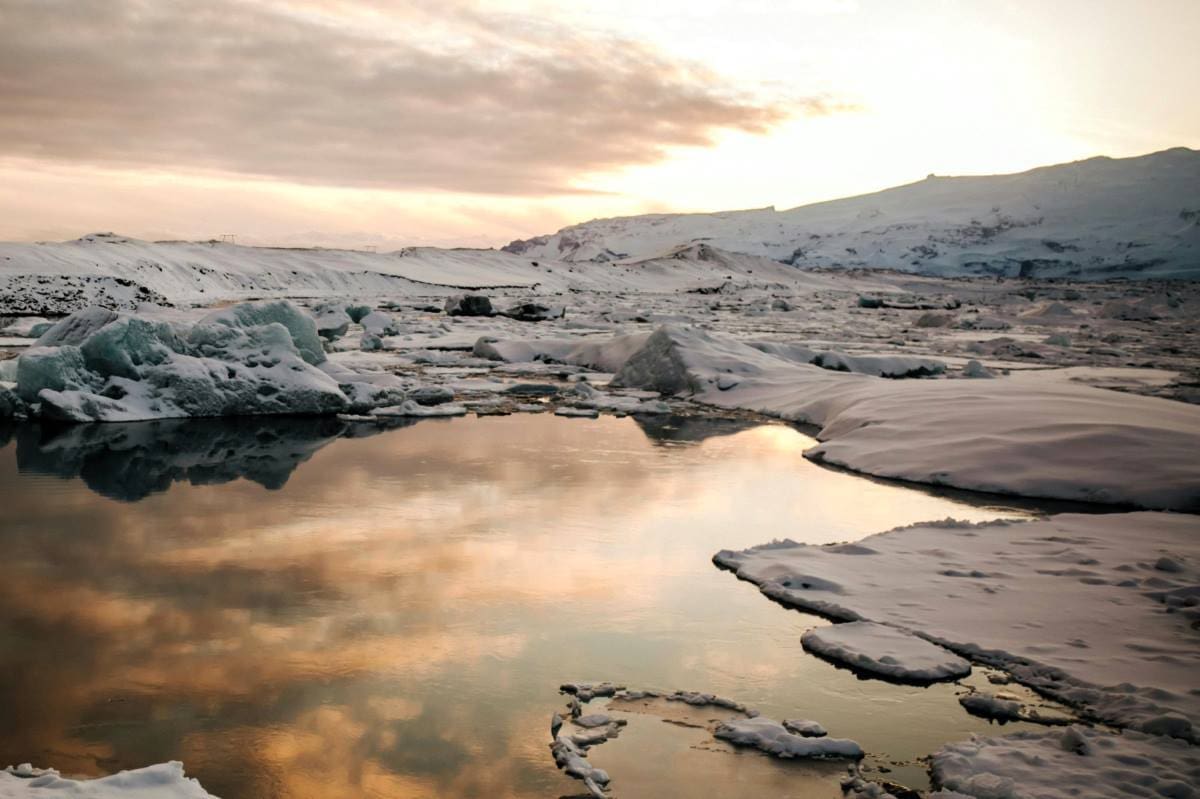
The ponds are made of melted snow but can also include a mix of seawater that has seeped in as well as released soil sediment or melted ice from the pack of ice below that hosts small organisms. By taking sea-ice core samples and measuring aerosol emissions around these pools, the team was able to show that ice-nucleating particle concentrations were higher there than in seawater. That likely means there are specific biological processes at play in these pools, contributing to their formation.
Researchers in the Department of Atmospheric Science led the work with samples collected during the MOSAiC Expedition – the Multidisciplinary Drifting Observatory for the Study of Arctic Climate. The expedition is a $150 million international effort to develop a better understanding of declines in Arctic sea ice and how they are linked to climate change. Germany’s Alfred Wegener Institute led the expedition, with key support from the Cooperative Institute for Research in Environmental Sciences – a partnership of the University of Colorado Boulder and the National Oceanic and Atmospheric Administration. In total, scientists and funding agencies from 20 nations were involved, including support from the National Science Foundation, Department of Energy, NOAA and NASA.
The 2019-2020 MOSAiC project offered an opportunity to gather data on these particles in a region that is already feeling the effects of climate change in the form of glacial melt, permafrost thaw and sea-ice decline. So far, only a few specific particles are known to be a part of this cloud formation process. And their path into the atmosphere has rarely been studied in the northernmost, extreme high Arctic, partially because it is difficult to gather samples in that challenging environment.
Camille Mavis, a CSU doctoral student, served as lead author on the paper. She said the Arctic environment lent itself to studying these particles because it is a somewhat simpler system with fewer animals and variables than others around the globe.
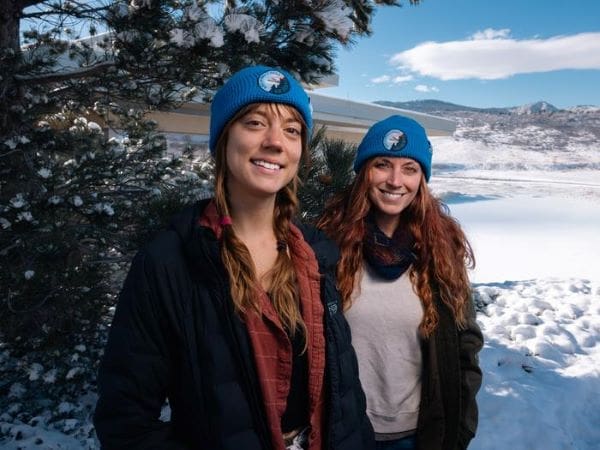
She said the Arctic is warming four times faster than the rest of the globe. That could mean more ponds may form in the future, or small changes in their composition could significantly alter the entire system.
“Clouds are complex, and there is still a lot of uncertainty associated with how aerosol interactions affect cloud radiative effects overall. Developing an understanding of the role these particles play will help with weather modeling and a host of other benefits in the future,” Mavis said. “Our current models don’t do a good job of mimicking these clouds right now, especially in polar regions.”
CSU Research Scientist Jessie Creamean traveled with the MOSAiC Expedition to collect the samples used in this study and is the senior author on the paper. She said only a handful of research papers have considered meltwater as a source for these key particles prior to this work.
“The clouds in the Arctic are different than you would find in the Pacific or Atlantic. They behave differently despite having some of the same general materials and processes,” she said. “That is part of the reason we want to understand how they are formed there, because each region is unique in this small but important process. Our work shows the complex interactions and composition of these ponds and how they contribute to that process.”
University Distinguished Professor Sonia Kreidenweis also served as an author on the research. The project continues her decades-long work in the characterization of the physical, chemical and optical properties of atmospheric particulate matter, and its effects on visibility and climate.
She said the team will now investigate the makeup of the particles and how conditions and processes contribute to their release.
“The particles studied can trigger ice formation at relatively warm temperatures and appear to be more closely associated with time spent over ice rather than the open ocean,” she said. “More research is needed to understand how they are released from meltwater, and how big a role they play in the radiation budget as Arctic melt seasons grow longer and larger.”
Journal Reference:
Mavis, C. E., Vazquez, M., Bekemeier, C. A., Barry, K. R., Chamberlain, E. J., Schmale, J. et al., ‘Meltwater as a local source of ice nucleating particles in the central Arctic summer’, Geophysical Research Letters 53, e2025GL118445 (2026). DOI: 10.1029/2025GL118445
Article Source:
Press Release/Material by Joshua Rhoten | Colorado State University (CSU)
Featured image credit: Pavel Danilyuk | Pexels