Summary:
More spring storms are forming over the North Atlantic than in previous decades, with some travelling farther into northern Europe, according to a study published in the Journal of Geophysical Research: Atmospheres. Researchers led by the University of Gothenburg analyzed 85 years of atmospheric data, spanning 1940 to 2024, to examine how cyclone activity has changed across the Northern Hemisphere.
The study found substantial shifts in storm behavior during spring and autumn, seasons that have received less attention than winter and summer in climate research. Over the North Atlantic, spring cyclone formation has increased, while Arctic spring cyclones have become stronger, longer-lived and capable of travelling greater distances. In the North Pacific, autumn storms have grown larger and persisted for longer periods.
The researchers link these changes to climate-driven shifts in atmospheric conditions and the continued decline of Arctic sea ice. As more open water is exposed, additional heat and moisture enter the atmosphere, creating conditions that favor stronger cyclones and support shifts in storm tracks. The findings suggest that climate change is altering cyclone characteristics across the Northern Hemisphere and that spring and autumn storms deserve greater consideration in weather forecasting and long-term climate projections.

— Press Release —
Spring storms are becoming increasingly common in Europe
Storm Dave, which swept across northern Europe over the Easter weekend, is a recent example of what new research from the University of Gothenburg has revealed. Spring storms forming over the North Atlantic have become more common than they were 80 years ago, and this is due to climate change.
In the northern hemisphere, storm seasons follow a seasonal cycle. Storms are weakest and least frequent in summer, and most intense in winter. As a result of global warming, storm patterns and their course have changed, and several studies have indicated that winter storms appear to be occurring more frequently and with even greater intensity.

Less Arctic sea ice
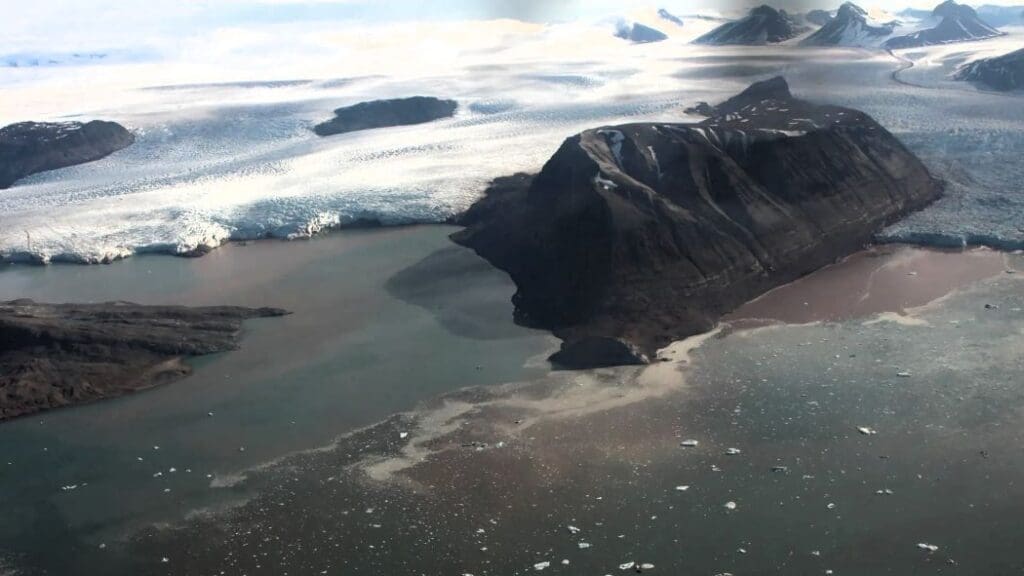
“One factor that may be contributing to the formation of more storms is the reduction in Arctic sea ice. Open water can release more heat and moisture into the atmosphere than when there is a layer of ice covering the sea. The shrinking sea ice also means that storms can take new paths across the Arctic oceans,” says Zhi-Bo Li, researcher in climatology at the University of Gothenburg.
Most climate research focus on how climate change has affected the peak and off-peak seasons for storms, in winter and summer. However, in a new study, Zhi-Bo Li and his colleagues have chosen to investigate how storms in the Northern Hemisphere have changed during spring and autumn from the 1940s to the present day.
Changes in spring and autumn
“We can see that storms over the North Atlantic, the North Pacific and the Arctic Ocean have changed very noticeably during spring and autumn. A storm as powerful and persistent as Dave used to be quite rare in April, but now we are seeing them occur more frequently and pass through longer distances. Previously, many spring storms would fizzle out over the British Isles, but now they sometimes reach as far as Scandinavia,” says Li.
The researchers have used historical weather data from 1940 to 2024 to build up a picture of how storms have changed. The main finding of the study is that these changes vary depending on the season and region. In the Arctic, north of the 65th parallel, spring storms are becoming more powerful, lasting longer and travelling further. In the North Atlantic, more spring storms are forming than before, whilst in the North Pacific, it is the autumn storms that have intensified and are lasting longer.
Study fills a gap
“Generally speaking, we are seeing a clear change in the storm landscape in the Northern Hemisphere. Our study fills a gap in our understanding of how storms behave during the transition from winter to summer; these are significant changes that have previously been overlooked. This is crucial if we are to develop better weather forecasts and plan effective adaptations to a changing climate,” adds Li.
Journal Reference:
Li, Z.-B., Heuzé, C., Song, J.-N., Crawford, A., Lai, H.-W., & Chen, D., ‘All-season analysis of extratropical and arctic cyclones over the Northern Hemisphere oceans during 1940–2024’, Journal of Geophysical Research: Atmospheres 131, 6: e2025JD044894 (2026). DOI: 10.1029/2025JD044894
Article Source:
Press Release/Material by Olof Lönnehed | University of Gothenburg
Featured image credit: wirestock | Magnific