The Arctic is undergoing profound transformations that are accelerating climate change. Once a region that stored carbon dioxide for millennia in its frozen soils, the Arctic tundra is now becoming a significant emitter of carbon due to increasingly frequent wildfires.
This shift is one of the key findings in NOAA’s 2024 Arctic Report Card, which documents rapid and multifaceted changes across the region. As the Arctic warms, ecosystems, wildlife, and indigenous communities face mounting challenges in adapting to an increasingly unpredictable environment.
According to NOAA Administrator Rick Spinrad, Ph.D., the Arctic tundra’s transition from carbon sink to carbon source is a crucial development in the context of climate change.
“Our observations now show that the Arctic tundra, which is experiencing warming and increased wildfire, is now emitting more carbon than it stores, which will worsen climate change impacts,” Spinrad said. “This is yet one more sign, predicted by scientists, of the consequences of inadequately reducing fossil fuel pollution.”
The 2024 Arctic Report Card synthesizes data from 97 scientists across 11 countries, capturing critical observations from the Arctic’s land and sea environments. These findings highlight the far-reaching effects of warming temperatures and increased precipitation, both of which are reshaping ecosystems, wildlife behavior, and human activity.

Increasing temperatures and extreme weather
The Arctic continues to experience some of the highest temperatures ever recorded.
2024 marked the second-warmest year for annual surface air temperatures in the Arctic since 1900. Notably, autumn 2023 and summer 2024 were especially warm, ranking as the second and third warmest on record, respectively. This warming trend was accompanied by a significant heatwave in early August 2024, which set all-time high daily temperatures in northern Alaska and several Canadian communities.
These extremes are consistent with a broader trend: the last nine years have been the warmest on record in the Arctic.
Rain-on-snow events, which occur when precipitation falls as rain onto snow, are becoming more common. These events coat the landscape in a layer of ice, creating challenges for wildlife that rely on accessible food sources and for people who depend on traditional travel routes. These shifts are a stark reminder of the urgency of adaptation in response to rapid environmental changes.
Sea ice and ocean temperatures
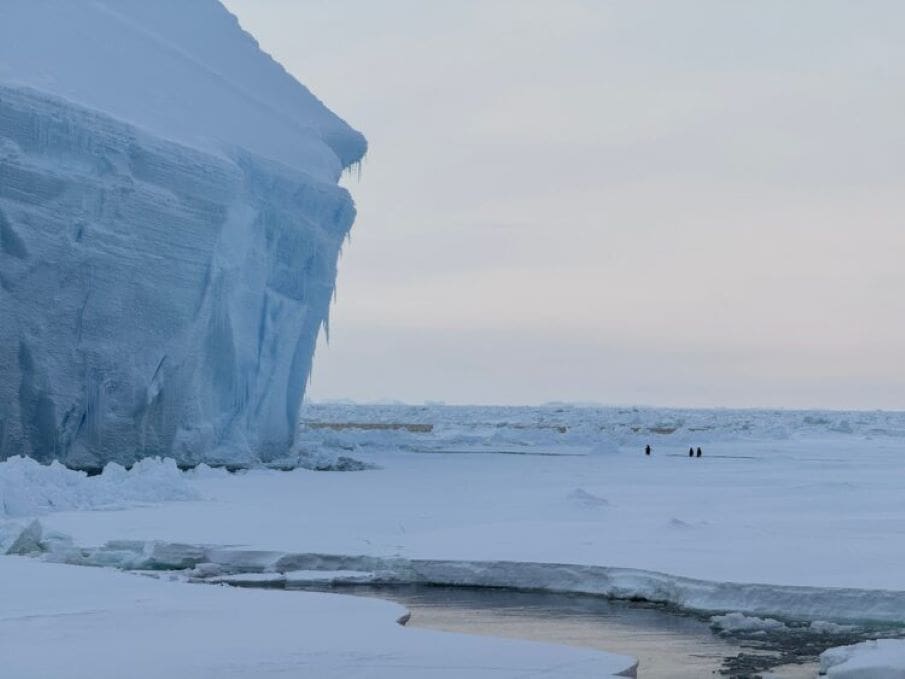
Arctic sea ice is retreating at an alarming rate, contributing to the broader environmental changes observed in the region. In September 2024, the extent of Arctic sea ice was the sixth-lowest in the 45-year satellite record, with the lowest minimums occurring in each of the last 18 years. The warming of the Arctic Ocean is particularly pronounced in shallow seas, where sea surface temperatures have increased by 2–4°C above the 1991-2020 average in many regions.
This change is affecting the marine food web, with plankton blooms – the foundation of the Arctic marine ecosystem – showing increased activity in most regions, though 2024 saw a dip in their abundance across large parts of the Arctic. The Chukchi Sea, in particular, has seen some cooler-than-average temperatures, offering a glimpse of regional variations in environmental trends.
Wildfires and carbon emissions on land
Perhaps one of the most concerning findings is the growing carbon emissions from Arctic wildfires. As the region warms, the tundra, once a significant carbon sink, has turned into a net carbon emitter. Circumpolar wildfire emissions have averaged 207 million tons of carbon per year since 2003. This new source of carbon adds to the already significant atmospheric burden of heat-trapping gases.
The decline of Arctic migratory tundra caribou populations is another sign of the changing environment. Over the last two to three decades, large inland herds have decreased by 65%, with only small coastal herds showing signs of recovery. These declines are linked to the intensifying summer heat, which is projected to worsen over the next few decades. Indigenous knowledge, alongside scientific research, will be crucial for managing these impacts.
Another shift is the increase in snow accumulation during the 2023-2024 winter season, which was above average across the Arctic. However, despite the increased snowfall, the snow season was the shortest in 26 years, with significant early snowmelt occurring one to two weeks earlier than historical averages. These shifts in snow cover and melting patterns are important markers of broader climatic disruptions that will have lasting impacts on local wildlife, human infrastructure, and cultural practices.
The need for adaptation
The 2024 Arctic Report Card highlights the critical need for adaptation as the region rapidly changes due to rising temperatures and increased wildfires. Twila Moon, lead editor of the report and deputy lead scientist at the National Snow and Ice Data Center, emphasized the importance of integrating Indigenous knowledge with scientific research.
“Indigenous knowledge and community-led research programs can inform successful responses to rapid Arctic changes,” she said. The findings highlight that the Arctic’s environment is not just changing – it is changing faster than scientists had anticipated, with long-term consequences for both the natural world and human societies.
As the Arctic continues to warm, the ripple effects of these changes will be felt worldwide. With many of the region’s vital signs at or near record extremes, scientists are grappling with the need for more effective adaptation and mitigation strategies.
According to Gerald Frost, senior scientist at Alaska Biological Research, Inc., the trends observed in the Arctic are not merely short-term fluctuations but long-term, persistent changes that signal a new phase in global climate dynamics.
More information:
About 2024 Arctic Report Card | 2024 Report Card PDF | Arctic Report Card Data Portal
Article Source:
Press Release/Material by National Oceanic and Atmospheric Administration (NOAA)
Featured image A group caribou from the Western Arctic Caribou Herd travels along a winter trail between the villages of Selawik and Ambler, Alaska, within the Selawik National Wildlife Refuge. The herd migrates through and sometimes winters on the refuge. Credit: Lisa Hupp | USFWS | Public Domain