In brief:
Sea surface temperatures reached exceptional levels in several regions around Europe during the summer of 2026, with parts of the Mediterranean and northeastern Atlantic experiencing marine heat that researchers found would have been very rare or virtually impossible in a climate without the human-caused warming experienced to date.
July brought the hottest global sea temperatures recorded for that month, while waters around Europe were among the regions experiencing particularly strong anomalies. An attribution analysis by World Weather Attribution (WWA) examined conditions across four areas: the Celtic seas, the Bay of Biscay and waters west of the Iberian Peninsula, the western Mediterranean and the eastern Mediterranean.
Researchers assessed the warmest 14-day sea surface temperature period of the year, alongside the warmest 14-day period specifically during July. The distinction allowed them to examine both the severity of the heat and its unusually early arrival.

Climate change made extreme sea temperatures far more likely
Observations showed substantial warming across all four regions. The increase associated with the annual 14-day extreme was estimated at 1.2 °C in the Celtic region and 1.5 °C around the Bay of Biscay and Iberian Peninsula, rising to 3.1 °C in the western Mediterranean and 2.6 °C in the eastern Mediterranean.
In the Celtic region, the probability of an event comparable to that observed in 2026 was estimated to have increased about 30-fold. Researchers calculated that similar conditions would have represented roughly a 1-in-100-year event in a climate 1.4 °C cooler. In the other three regions, the observed annual extremes would have been virtually impossible under pre-industrial conditions.
Read also: Climate change making Europe drought ‘more severe’: study
When observations and climate models were combined to estimate the contribution from human-induced warming, the analysis attributed about 2 °C of additional heat to climate change in both Mediterranean regions. The estimated contribution was 1.4 °C around the Bay of Biscay and Iberian Peninsula and 1.3 °C in the Celtic region. Observed trends were substantially stronger than those simulated by climate models in all regions except the Celtic seas, leading the researchers to regard the Mediterranean attribution estimates as conservative.
Mediterranean waters warmed fastest
The changes were particularly pronounced during summer. July sea temperature extremes showed a faster rate of warming than the annual maximum in every region studied, with the increase ranging from 1.5 °C in the Celtic seas to 3.4 °C in the western Mediterranean.
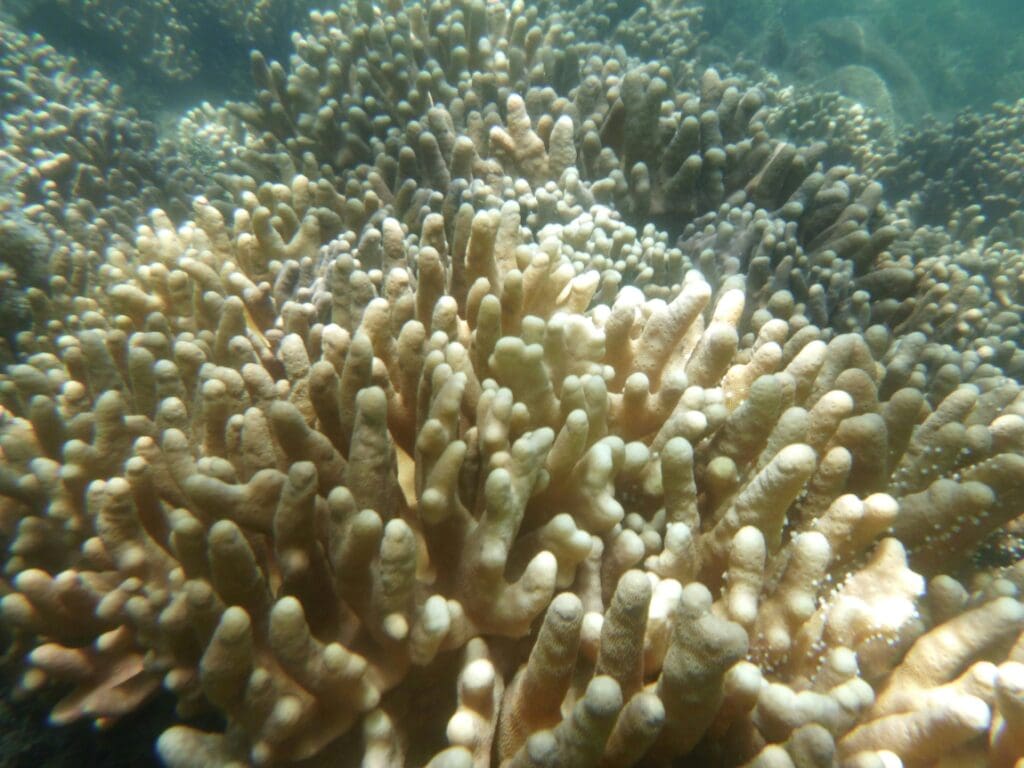
Marine heatwaves can affect entire ecosystems. Prolonged extreme temperatures can cause mass mortality among habitat-forming corals, sponges and macroalgae, with the loss of these foundation species affecting ecosystem structure and function. Benthic and demersal species can be especially vulnerable because their ability to move to more suitable temperatures is limited.
Changes are already being reported around European coasts. A major octopus bloom was reported in UK waters in 2026, while shifts in marine species towards previously cooler waters have also been observed. Such changes can alter ecological communities and affect fish, bivalves and crustaceans important for food production and aquaculture.
Warmer seas also affect people and weather
Warmer coastal waters can also increase risks for people. The European Centre for Disease Prevention and Control (ECDC) has warned that sustained high temperatures can create conditions favourable for Vibrio bacteria, which can cause vibriosis. Changing marine conditions may also support increases in jellyfish abundance in some areas, with possible consequences for recreation and tourism.
The atmosphere can respond to unusually warm seas as well. Higher sea temperatures increase evaporation and atmospheric moisture, while coastal air can become warmer and more humid. Previous research has linked very warm Mediterranean waters with conditions that can contribute to extreme rainfall, including the destructive flooding around Valencia in 2024.
Read also: Image of the day: Chlorophyll in the Mediterranean Sea and the blue economy
WWA also examined how widespread marine heatwaves have become. About 80% of the Celtic region experienced them under present conditions, compared with an estimated 30% in a climate 1.4 °C cooler. The corresponding changes were from 40% to 90% around the Bay of Biscay and Iberian Peninsula, from 40% to 80% in the western Mediterranean, and from 9% to nearly 70% in the eastern Mediterranean.
If global warming reaches 2.8 °C above pre-industrial levels, the researchers estimate that events comparable to those of 2026 could become another 1.3–1.9 °C hotter. Adaptation measures such as protecting marine habitats, reducing other ecosystem pressures and adjusting fisheries and aquaculture management can improve resilience, but the researchers warn that continued warming could push sea temperatures above levels many species currently living in these regions can tolerate.
Report:
Bergin, C. et al., ‘Climate change is driving unprecedented European ocean temperatures, with severe impacts for marine life’, WWA scientific report No. 90, World Weather Attribution (2026). DOI: 10.25560/132103
Article Source:
Press Release/Material by World Weather Attribution (WWA)
Featured image credit: Bergin et al. (2026) | DOI: 10.25560/132103 | CC BY-NC-ND